
Water Tank & Cistern Lining
Seamless potable-grade pure polyurea lining for drinking-water tanks, concrete cisterns, ground reservoirs, agricultural water tanks.
Water Tank and Cistern Lining with Polyurea: Equipment and Application Guide
Concrete and steel tanks degrade over time. Hairline cracks let groundwater intrude, carbonation attacks the rebar, and aging steel plates corrode from the inside out. Replacing a buried cistern or an elevated steel tower is expensive and disruptive; relining it with sprayed pure polyurea is not. A potable-water-grade polyurea membrane is applied as a seamless, flexible elastomer that bonds tightly to the prepared substrate, bridges dormant cracks, and is chemically inert in contact with drinking water — returning a tank to service within hours, not days.
This page explains why pure polyurea is the preferred lining material for potable and fresh-water storage, where it is used, and which Pioneer Spray machines are suited to the work. The JYYJ-H600, JYYJ-H-V6T, and JYYJ-H600PK all operate at 25–36 MPa with precise 1:1 ratio control, meeting the processing demands of fast-set polyurea chemistry. If your project involves petroleum or chemical storage rather than drinking water, see our industrial & chemical tank lining page instead.
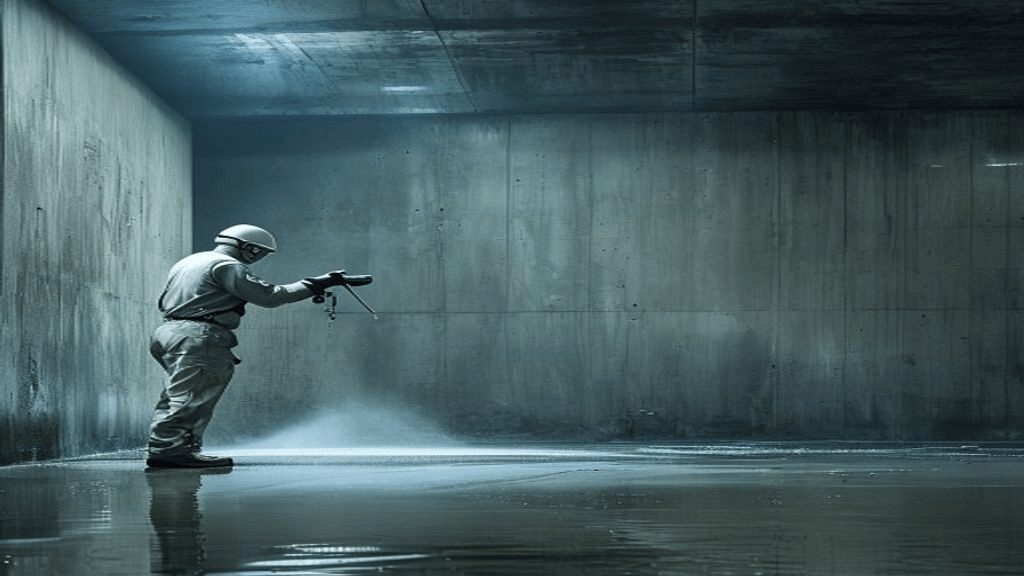
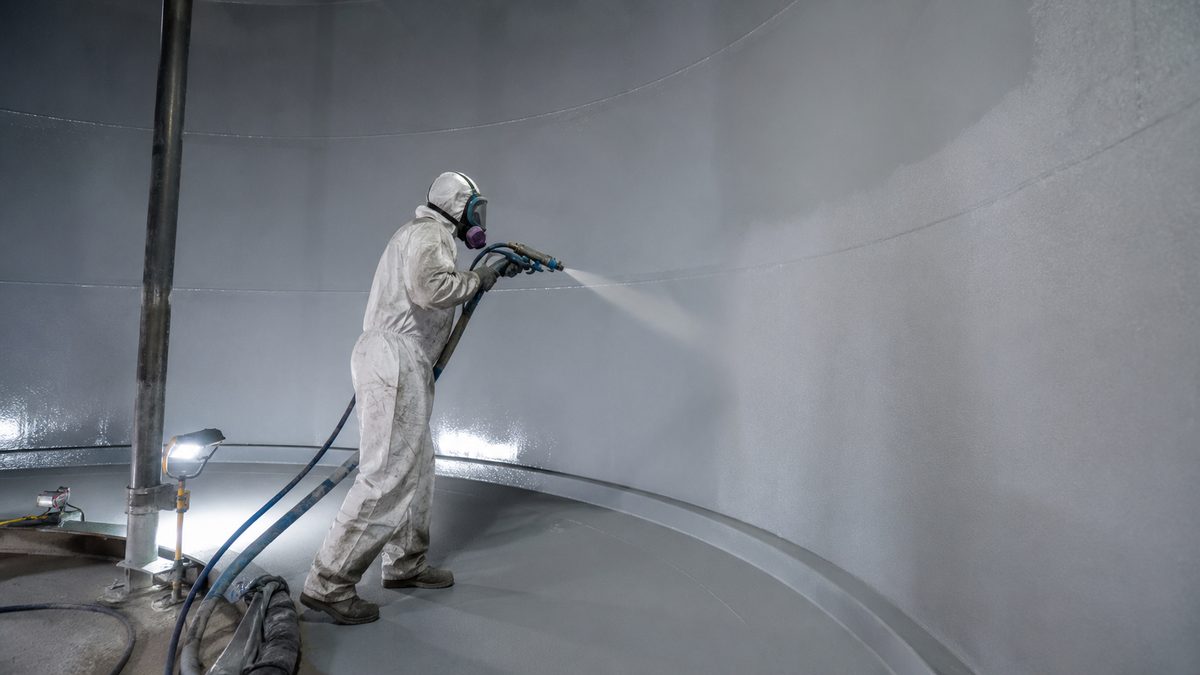
Why polyurea is the preferred choice for water tank and cistern lining
Potable-water storage imposes two requirements that most coating systems cannot meet simultaneously: food-contact safety and long-term mechanical durability. Pure polyurea, when formulated and certified to potable-water standards such as NSF/ANSI 61 drinking-water system components, satisfies both. The CDC guidance on safe water storage underlines that tank integrity — sealed, smooth, and crack-free — is fundamental to keeping stored water safe for consumption.
- Potable-grade, non-toxic membrane. Polyurea formulated and certified to potable-water standards leaches no harmful compounds into the stored water once fully cured. The monolithic membrane eliminates the crevices and seams where biofilm, algae, and sediment accumulate in bolted liner panels or tiled surfaces.
- Crack-bridging elastomer. Concrete tanks move with temperature cycles, soil settlement, and hydrostatic pressure. A high-elongation polyurea membrane — typically stretching 300–500 % before failure — bridges dormant hairline cracks and accommodates substrate movement without tearing, preventing the infiltration paths that rigid epoxy or cement coatings cannot close once cracked.
- Seamless, pinhole-free surface. Sprayed in place as a continuous film, polyurea leaves no seams, lap joints, or fastener penetrations through which water could migrate behind the lining. A holiday (pinhole) test after application confirms a defect-free membrane across the entire wetted surface.
- Fast cure and rapid return to service. Pure polyurea gels in seconds and is walk-on hard within minutes of application. A cistern taken out of service in the morning can be cleaned, prepared, lined, and refilled the same day, minimising supply interruption for agricultural operations, fire-suppression systems, or community water storage.
- Long service life on concrete and steel. The elastomeric membrane protects concrete from aggressive water chemistry and freeze-thaw cycles and shields steel plates from oxidation and pitting. Rehabilitating an existing structure with polyurea typically costs a fraction of demolition and replacement while delivering a service life measured in decades.
Where polyurea water-tank lining is used
Potable-Water Storage Tanks
Municipal and private drinking-water tanks lined with potable-grade polyurea gain a smooth, non-toxic, seamless inner surface that resists corrosion and biological fouling, protecting water quality from source to tap.
Underground & Rooftop Cisterns
Concrete cisterns buried underground or set on rooftops develop hairline cracks that let groundwater in or stored water out. A sprayed polyurea lining seals the structure completely and accommodates the minor movement typical of buried or thermally exposed shells.
Concrete Ground Reservoirs
Large reinforced-concrete ground reservoirs for municipal supply or irrigation are relined with polyurea to repair carbonation damage, seal cracked joints, and re-establish a watertight barrier without the cost and downtime of demolition and rebuild.
Agricultural & Livestock Water Tanks
Farm water tanks and livestock troughs made of concrete, galvanised steel, or fibreglass are lined to stop seepage losses, eliminate algae-promoting rough surfaces, and ensure the stored water remains clean and free of leached metal ions.
Fire-Protection Water Tanks
Fire-suppression reservoirs must hold their rated volume reliably for decades. A polyurea lining prevents the slow corrosion and crack-related losses that can reduce actual capacity below code requirements, ensuring water is available when it is needed most.
Elevated & Steel Water Towers
Steel water towers are prone to internal corrosion that eventually compromises structural integrity. A potable-grade polyurea coating applied to the blast-cleaned interior surface stops oxidation at the steel face and extends the service life of the structure without draining and repainting every few years.
The water-tank lining application process
Lining a potable-water tank with pure polyurea is a two-component process that depends on precise surface preparation, machine settings, and post-application verification. Each step below is non-negotiable for a lining that will stay bonded and remain potable-safe.
- 1. Surface preparation. Concrete substrates must be fully cured (minimum 28 days), free of laitance and standing moisture, and mechanically profiled by shot-blasting or grinding to achieve a clean, open, absorbent surface. Steel substrates are abrasive-blasted to a near-white finish and primed within the recoat window. Any cracks wider than hairline are routed and filled before lining. Moisture content must be within the polyurea supplier's limits — typically below 8 % for concrete — as excess moisture disrupts the fast-set cure.
- 2. Machine setup and material verification. The plural-component machine heats both the isocyanate (A-side) and polyol (B-side) to the manufacturer-specified temperature, typically 60–70 °C, and pressurises both streams to 25–36 MPa. The 1:1 volumetric ratio is confirmed before spraying begins. Only polyurea material carrying current potable-water certification (NSF/ANSI 61 style) is loaded into the machine for drinking-water projects.
- 3. Spray to specified membrane thickness. The lining is built in controlled passes. Typical potable-water linings are 60–125 mils (about 1.5–3 mm) in thickness. Critical areas such as floor-to-wall transitions, sumps, pipe penetrations, and inlet/outlet details receive additional build and are hand-detailed before the field coat to ensure full coverage at geometry changes.
- 4. Cure, holiday test, and return to service. The membrane is tack-free in seconds and walk-on hard within minutes. Before the tank is refilled, a holiday (spark or wet-sponge) test is run across the entire wetted surface to confirm zero pinholes or holidays. Dry-film thickness is checked at a minimum of one reading per square metre. Once the lining passes inspection, the tank is flushed and — after any mandated potability soak period per the certification body — returned to service.
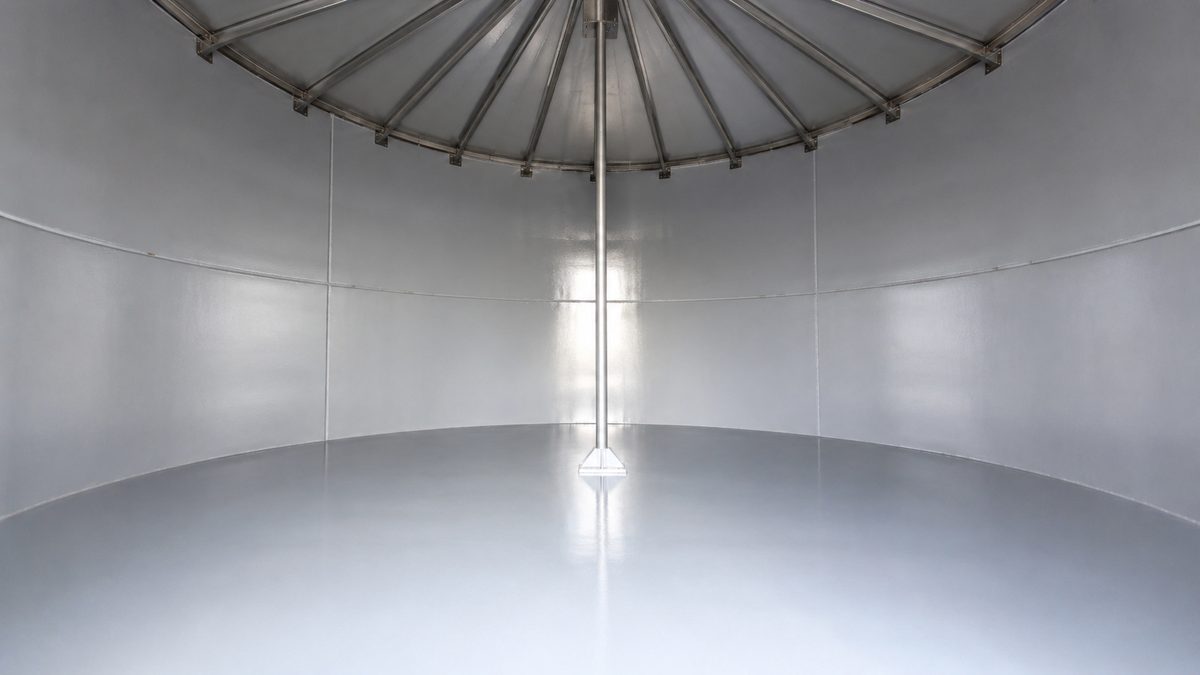
The equipment you need: high-pressure heated plural-component machines
Pure polyurea for water-tank lining is a 1:1 plural-component material with a gel time measured in seconds. It cannot be applied with low-pressure cartridge guns or unheated equipment. To atomise the two streams correctly at the gun and achieve the intimate mixing that produces a fully cured, non-extracting membrane, both components must be heated to roughly 60–70 °C and delivered at 25–36 MPa. Pioneer Spray machines are engineered for exactly this operating envelope.
The JYYJ-H600 is a practical choice for lining small-to-medium tanks and cisterns where the job can be completed with a single-shift output. For larger ground reservoirs or elevated towers where continuous high-volume spraying is required, the hydraulic JYYJ-H-V6T provides stable high pressure across extended spray runs. The JYYJ-H600PK package configuration simplifies mobilisation for contractors moving between multiple tank-lining sites. All three models maintain the precise 1:1 ratio and temperature control that potable-water-grade polyurea requires. See our complementary polyurea waterproofing page for above-grade membrane applications on roofs and terraces.
Not sure which JYYJ model suits your tank size, polyurea material supplier, or site power supply? Contact our engineers and we will recommend a machine, hose length, and gun configuration for your water-storage project.
Frequently Asked Questions
How is potable-water tank lining different from industrial or chemical tank lining?
The key difference is the material certification and formulation. Potable-water linings use polyurea specifically formulated and tested to be non-toxic in contact with drinking water — certified to standards such as NSF/ANSI 61 — and they must not leach detectable levels of regulated substances into stored water. Industrial and chemical tank linings, such as those for petroleum or process chemicals, prioritise solvent resistance and chemical barrier properties, and the polyurea formulation may not be safe for drinking-water contact. If your tanks hold petroleum products, acids, or industrial process liquids, see our industrial & chemical tank lining page for the appropriate guidance.
Which Pioneer Spray machine is best for water cistern and tank lining?
The JYYJ-H600 handles most small-to-medium cisterns and agricultural tanks efficiently. The JYYJ-H-V6T is preferred for larger ground reservoirs and elevated towers because its hydraulic drive maintains stable output pressure over long spray runs. The JYYJ-H600PK is ideal for contractors working across multiple remote tank sites where a compact, portable package reduces setup time. All three models operate in the 25–36 MPa range required for fast-set pure polyurea.
What thickness of polyurea is typical for potable-water tank lining?
Standard potable-water tank linings are typically 60–125 mils (about 1.5–3 mm) in dry-film thickness. Structural rehabilitation projects — where the concrete has significant cracking or spalling — may specify a heavier build of 100–150 mils (2.5–4 mm) for additional crack-bridging capacity. Dry-film thickness is verified with a gauge after application, and all readings must meet the project specification before the tank is cleared for refilling.
Can a low-pressure kit or cartridge spray gun apply potable-water polyurea?
No. Pure, fast-set polyurea requires a high-pressure, heated, plural-component machine to heat both components to 60–70 °C and deliver them at 25–36 MPa, achieving the intimate impingement mixing that ensures full cure and a non-extracting membrane. Low-pressure equipment cannot reach the required pressure or temperature, producing incompletely mixed material with soft spots, pinholes, and potential extractable residues — none of which is acceptable in a potable-water contact surface.
New to the material? Read our guide to what polyurea lining is, where it is used and the equipment it needs.
For a tank-specific deep dive, see our polyurea tank lining guide.
Also lining municipal structures? See our page on polyurea manhole and sewer lining.
Recommended JYYJ Machines
JYYJ-H600
Entry-level hydraulic spray machine — the gateway to professional-grade pressure. 2-12 kg/min at 36 MPa with 6-18 MPa hydraulic system pressure. Compatible with both polyurethane foam and polyurea coatings. Air-cooling system protects motor and pump for sustained heavy-duty operation.
JYYJ-H-V6T
Hydraulic workhorse with 7-inch PLC touchscreen control. 2-10 kg/min at 36 MPa, 105 m insulated pipe support, and intelligent automation. Ideal for contractors who need precision control without flagship pricing — the sweet spot between H600 entry and H600PK flagship.
JYYJ-H600PK
Adjustable-ratio hydraulic spray machine with 7-inch PLC touchscreen and adjustable mixing ratio (1:1~1:2). 2-10 kg/min at 36 MPa for polyurea, high-density foam, and precision-critical applications. Recipe memory and data logging for project documentation. Adjustable ratio handles temperature-driven viscosity shifts and custom material formulations — unique in the JYYJ line.
Recommended Materials
Browse Polyurea Coating (A + B) →- ● Potable-water-approved pure polyurea (NSF/ANSI 61 style certified, 1:1 ratio, non-toxic once cured)
- ● Fast-set polyurea for concrete cisterns with high-elongation crack-bridging formulation
- ● Aliphatic topcoat where the tank exterior or rim is exposed to UV and color stability is required
Why This Setup Works
Potable-grade non-toxic seamless lining — no crevices or joints for biofilm or sediment to accumulate
Crack-bridging elastomer accommodates concrete movement without tearing or delaminating
Fast cure returns tank or cistern to service within hours of application
Rehabilitates aging concrete and steel cisterns at a fraction of demolition and replacement cost
Technical Considerations
- Concrete must be fully cured (28 days min), moisture below 8 %, and mechanically profiled; steel blasted to near-white and primed
- Verify current potable-water certification (NSF/ANSI 61 style) for the specific polyurea material before application
- Typical build 60–125 mils (1.5–3 mm); structural rehabilitation may require 100–150 mils (2.5–4 mm)
- Pure polyurea requires 1:1 ratio, 60–70 °C heat, and 25–36 MPa high-pressure plural-component machine
Real Projects in Water Tank & Cistern Lining
Projects for this application are being documented. Share your project requirement and we'll send relevant reference cases.
See Water Tank & Cistern Lining in Practice
YouTube demonstration videos
@YongjiaPolyurethanemachinepuRelated Guides
- Polyurea Cistern Liner: Seal & Protect Potable Water Tanks
How polyurea cistern liners stop cracks, leaks and contamination in potable water tanks. Prep, NSF/ANSI 61 certification, concrete vs steel, and turnkey spray equipment for rehab.
- What Is Polyurea Lining? Types, Uses & Spray Equipment
Polyurea lining explained: how it compares to polyurethane and epoxy, key properties, major lining applications, and the spray equipment needed to apply it.
Frequently Asked Questions
What JYYJ machine is best for water tank & cistern lining?
Do you supply the raw materials too?
How long is shipping to Russia / LATAM / Middle East?
Do you provide technical training and installation support?
What certifications does the equipment have?
Planning a water tank & cistern lining project?
Share your output, voltage, and project scale. Pioneer recommends a matched JYYJ machine + material combination within 24 hours.