
Spray Foam Roofing
Seamless spray polyurethane roof systems for commercial flat roofs and metal roof retrofits. Self-flashing, reflective topcoat compatible.
Spray Foam Roofing: SPF Roof Insulation, Coating & Equipment Guide
Spray foam roofing solves two problems in a single application: it is one of the highest-performing thermal insulations available, and its closed-cell structure resists water intrusion. For commercial and industrial roofing contractors, the result is a seamless, fully adhered membrane with no fasteners to puncture and no laps to fail. This page covers what SPF roofing is, where it is used, the system build-up, the application process, and the spray equipment that makes a production roofing operation profitable. Pioneer Spray manufactures the high-pressure plural-component machines built for this duty, including the high-output hydraulic JYYJ-H-V8T.
Seamless & Self-Flashing
Sprayed in liquid form, SPF expands and cures into one monolithic membrane with no seams, fasteners, or gaps at penetrations, parapets, and curbs.
Insulation + Waterproofing
Closed-cell spray polyurethane foam delivers both a high-R thermal layer and a continuous air/water barrier in a single application.
Lightweight Restoration
SPF roofing can be applied directly over many existing roofs, adding minimal dead load while extending service life without a costly tear-off.
Positive Drainage
Foam can be built up to re-slope low spots, eliminating ponding water and directing runoff to drains.
What Is Spray Foam Roofing?
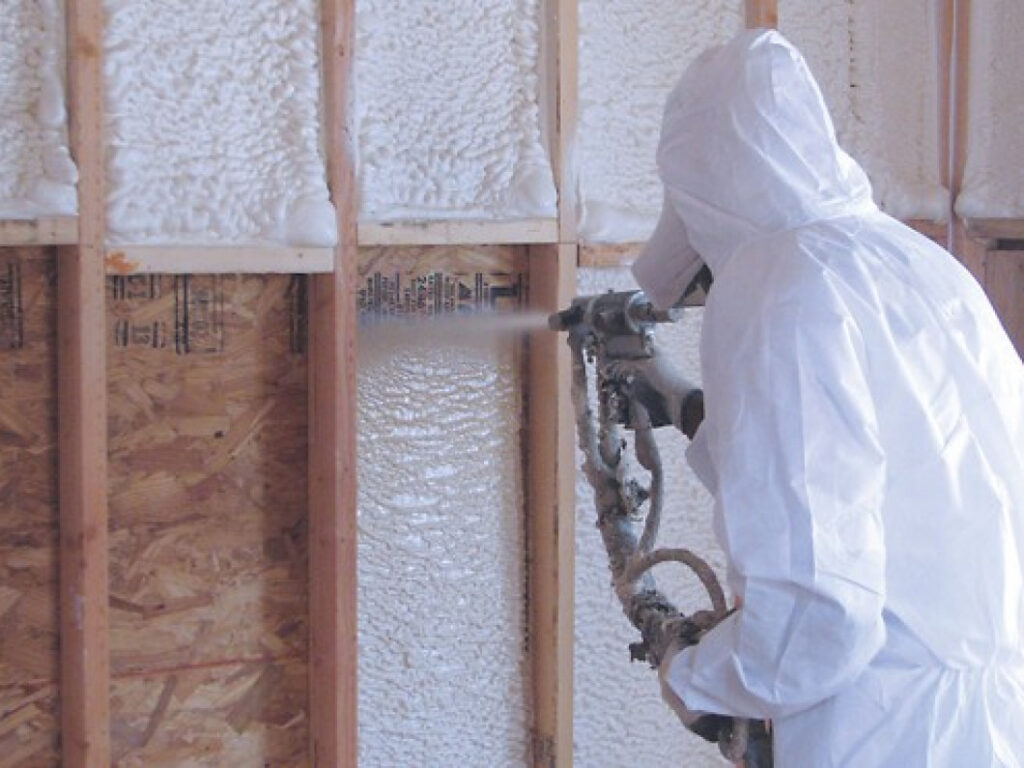
Spray foam roofing, also called SPF roofing or a spray polyurethane foam roof, is a seamless roofing system created by spraying a two-component (plural-component) polyurethane mixture directly onto the roof deck. The two liquids — an isocyanate (A-side) and a resin/polyol blend (B-side) — meet at the spray gun, react instantly, and expand to many times their liquid volume before curing into a rigid, closed-cell foam. The result is a single, fully adhered membrane that conforms to every penetration, edge, and irregular surface on the roof.
For roofing contractors, the appeal of roof insulation spray foam is that it solves two problems at once: it is one of the highest-performing thermal insulations available, and the closed-cell structure resists water intrusion. A protective topcoat is then applied over the foam to shield it from UV and weathering, completing the system. Because the foam is applied as a liquid and self-adheres, there are no mechanical fasteners puncturing the membrane and no seams to fail — historically the most common leak points in conventional flat roofs.
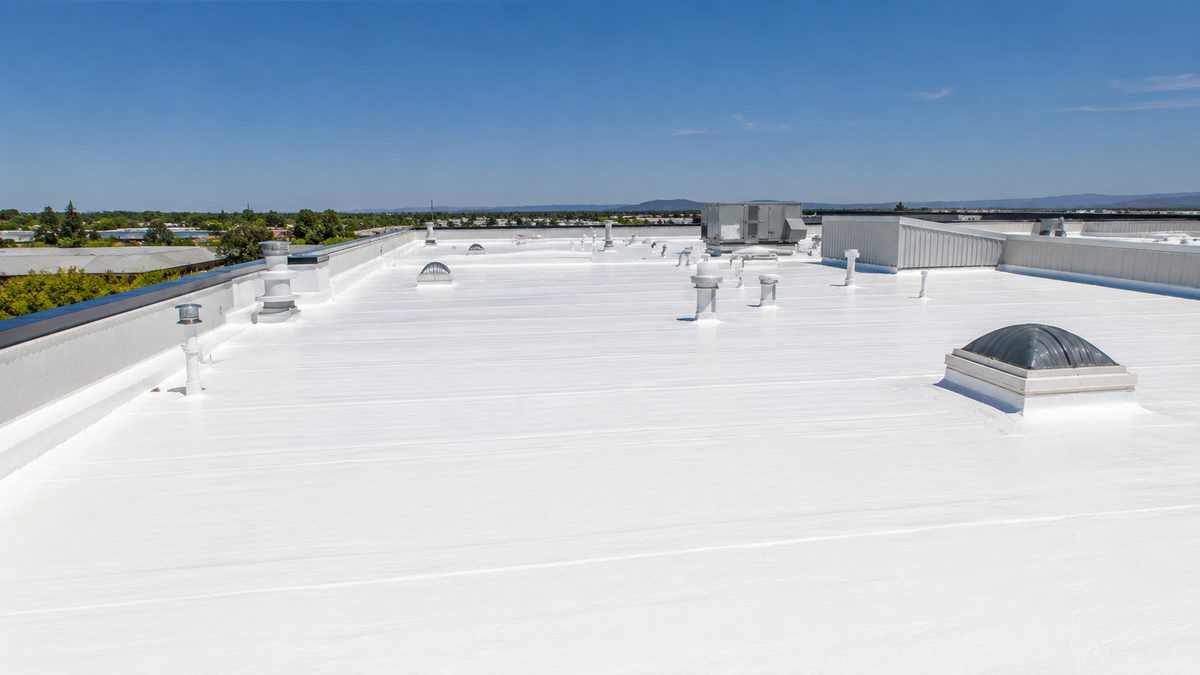
Why Contractors Choose SPF Roofing
SPF roofing has become a mainstay for commercial and industrial re-roofing because it combines energy performance, leak resistance, and fast installation. Key reasons applicators specify it:
- Continuous insulation: closed-cell SPF provides a high R-value per inch and, just as important, eliminates thermal bridging and air leakage across the whole roof plane.
- Monolithic waterproofing: with no seams or fasteners, there are dramatically fewer paths for water to enter the building.
- Re-sloping built in: contractors can taper the foam to correct dead-level areas and engineer positive drainage, ending chronic ponding.
- Restoration over existing roofs: in many cases SPF is sprayed over an existing membrane or metal deck after preparation, cutting landfill waste and downtime.
- Light dead load: a typical SPF system adds only a fraction of the weight of a built-up or ballasted roof, easing structural concerns on retrofits.
- Renewable surface: at the end of the topcoat's life, the roof is usually re-coated rather than torn off, keeping the foam in service for decades.
The Spray Polyurethane Foam Alliance maintains contractor guidance and technical documents on SPF roofing system design and quality; see the Spray Polyurethane Foam Alliance (SPFA) for industry standards. Foam and coating physical properties are commonly verified against test methods published by ASTM International.
Where Spray Foam Roofing Is Used
SPF roof insulation and coating systems are most widely used on flat and low-slope roofs, where seamless waterproofing and built-in drainage matter most. Common applications include:
- Commercial and industrial flat roofs — offices, retail, manufacturing plants, and large institutional buildings.
- Warehouses and distribution centers — vast roof areas where SPF's continuous insulation cuts cooling and heating loads.
- Metal roof restoration — SPF fills seams, fastener heads, and rust pits on aging metal decks, restoring watertightness and adding insulation.
- Cold storage and refrigerated facilities — where high R-value and an unbroken vapor/air barrier are critical to controlling condensation and energy use.
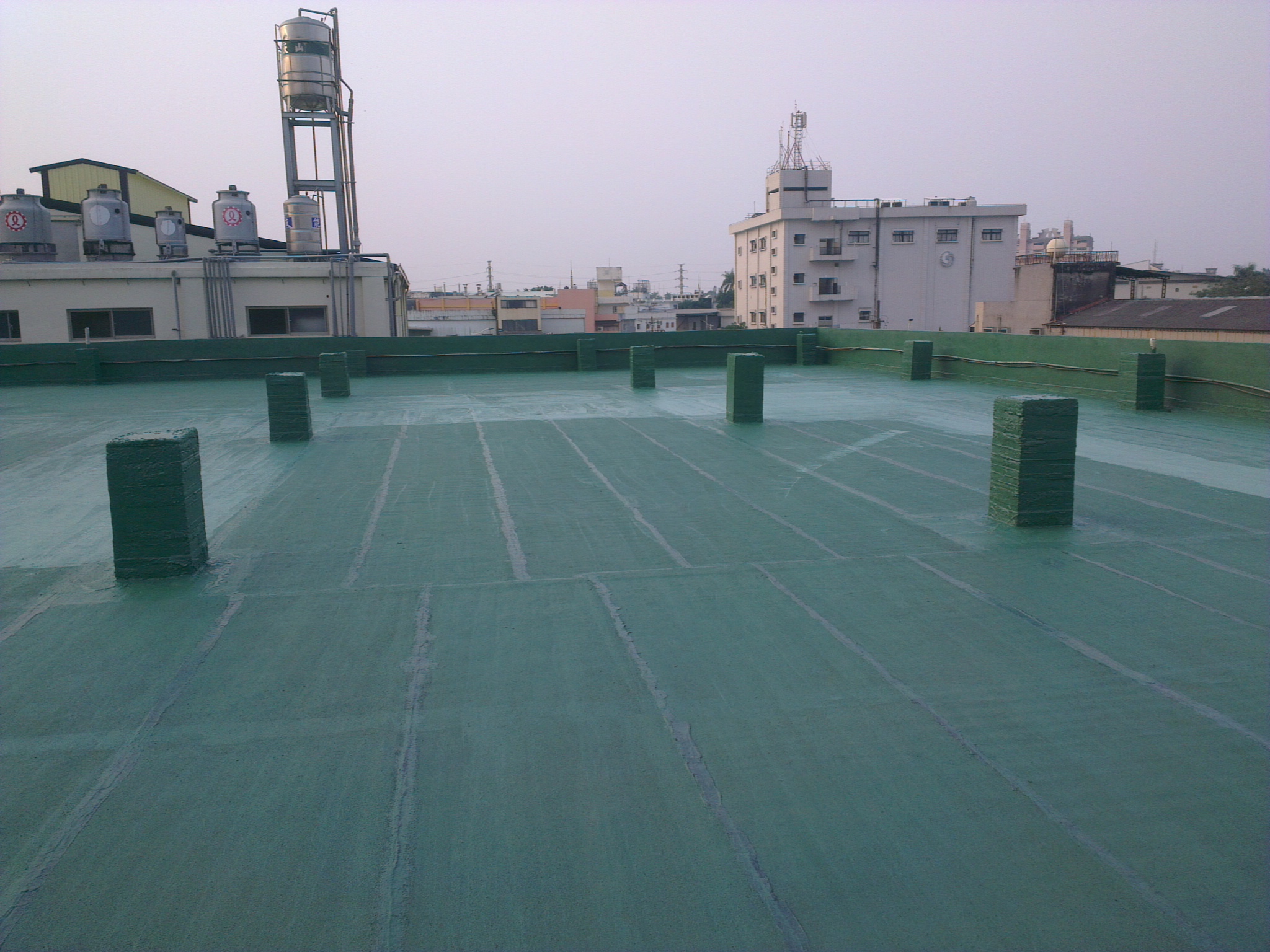
The SPF Roof System Build-Up
A complete spray polyurethane foam roof is a layered system, not just foam:
1. Closed-Cell SPF Base
Roofing-grade closed-cell foam is sprayed to the specified thickness to provide insulation, structural rigidity, and the primary waterproofing layer. Closed-cell foam is used (rather than open-cell) because it resists water absorption and supports foot traffic.
2. Protective Elastomeric / Silicone Topcoat
Cured SPF must be protected from UV light, which would otherwise degrade the foam surface. A protective polyurethane roof coating — typically silicone, acrylic, or polyurea/polyurethane elastomeric — is applied over the foam, often with embedded granules for traffic and impact resistance. This topcoat carries the long-term UV and weathering duty and is what gets renewed over the roof's life.
The Application Process
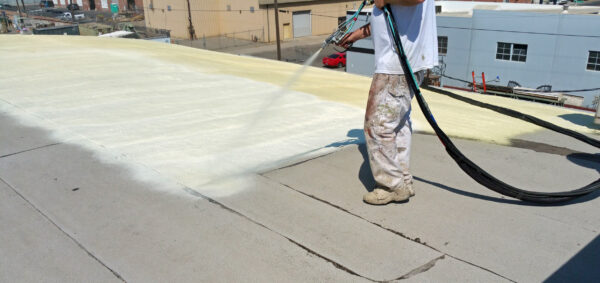
- Roof survey & prep: inspect and document the deck, check moisture, repair structural issues, and clean/prime the surface so the foam bonds properly. Spraying is scheduled around dry, calm, in-spec ambient and surface temperatures.
- Spray the SPF: the plural-component machine heats and pressurizes the A and B components, the crew sprays the foam in passes to the target thickness, building taper for drainage as needed.
- Apply the topcoat: once the foam has cured and passed inspection, the elastomeric or silicone topcoat is sprayed or rolled to the specified mil thickness, with granules broadcast into traffic areas if required.
- Quality control: verify foam thickness and density, check adhesion and surface texture, confirm coating coverage rate and dry film thickness, and document the work for warranty.
The Equipment You Need: High-Pressure Plural-Component Machines
SPF roofing lives or dies on the spray equipment. Because the two components must meet at an exact ratio, temperature, and pressure to react correctly, contractors use heated, high-pressure plural-component proportioners — not low-pressure or single-component sprayers. The machine must hold consistent pressure and heat at high output so the foam cures uniformly across a large roof without off-ratio soft spots.
Pioneer Spray builds JYYJ-series high-pressure machines (25–36 MPa) engineered for exactly this duty: independent heating of both components, stable proportioning, and the throughput needed for production roofing. For large commercial and warehouse roofs where output drives the job's profitability, the high-output hydraulic JYYJ-H-V8T is built to keep a crew spraying all day. Pioneer also supplies compatible PU/polyurea materials and spare parts. To match a machine to your roof sizes, crew, and material specs, contact our team for a recommendation.
Frequently Asked Questions
What is the difference between SPF roofing and a polyurethane roof coating?
The spray polyurethane foam is the insulating, waterproofing base layer. The polyurethane (or silicone/acrylic) roof coating is the protective topcoat sprayed over the foam to shield it from UV and weather. A complete SPF roof needs both — foam for performance, topcoat for protection and renewal.
Can spray foam roofing be installed over an existing roof?
In many cases, yes. After a survey, moisture check, and proper surface preparation, SPF can be sprayed over many existing membranes and metal decks, avoiding a full tear-off. Wet or deteriorated areas must be repaired or removed first so the foam bonds to a sound, dry substrate.
What kind of machine is required to spray SPF roofing?
A heated, high-pressure plural-component (two-component) proportioner. It must heat and pressurize both the A and B sides and meter them at the correct ratio. For large roofs, a high-output unit such as the Pioneer JYYJ-H-V8 keeps production high and ratio consistent across the whole roof.
Does spray foam roofing eliminate ponding water?
It can. Because the foam is applied as a liquid and built up in passes, contractors can taper it to re-slope low areas and create positive drainage toward drains and scuppers, which removes the standing water that shortens the life of conventional flat roofs.
Recommended JYYJ Machines
JYYJ-3H
Entry-level pneumatic spray machine delivering stable 2-10 kg/min output at 25 MPa. Ideal for small to medium insulation, roofing, and residential projects. Single-phase 380V power, 9.5 kW heating, and self-cleaning spray gun included. The most affordable starter unit in the JYYJ pneumatic line.
JYYJ-H-V8T
Pioneer's top-tier flagship — the highest-output PLC-controlled spray machine in the JYYJ line. 2-15 kg/min at 36 MPa with 10-inch PLC touchscreen, one-click start/stop operation, and low-temperature protection that prevents incomplete mixing in cold conditions. Flat-mounted booster pump design reduces footprint while maintaining the highest output. Ideal for the most demanding industrial polyurea and polyurethane projects.
JYYJ-H600PK
Adjustable-ratio hydraulic spray machine with 7-inch PLC touchscreen and adjustable mixing ratio (1:1~1:2). 2-10 kg/min at 36 MPa for polyurea, high-density foam, and precision-critical applications. Recipe memory and data logging for project documentation. Adjustable ratio handles temperature-driven viscosity shifts and custom material formulations — unique in the JYYJ line.
Recommended Materials
Browse Polyurethane Foam (A + B) →- ● Closed-cell roofing-grade PU (48-50 kg/m³)
- ● Silicone or acrylic reflective topcoat
- ● Embedded mesh for high-wind zones
Why This Setup Works
Monolithic membrane — no seams to fail at penetrations or joints
Self-flashing around HVAC curbs, drains, and parapets
Tapered build-up to slope — solves ponding water without costly re-slope
R-7 per inch — doubles as insulation layer
Technical Considerations
- Wind uplift rating — consult FM / UL classification for region
- Topcoat reflective index — required for cool-roof tax credits
- Ice shield zones — may need additional elastomer layer at eave
- Density for roof: 48-50 kg/m³ minimum (foot traffic durability)
Real Projects in Spray Foam Roofing
Representative projects. Full case library expanding with customer authorizations.
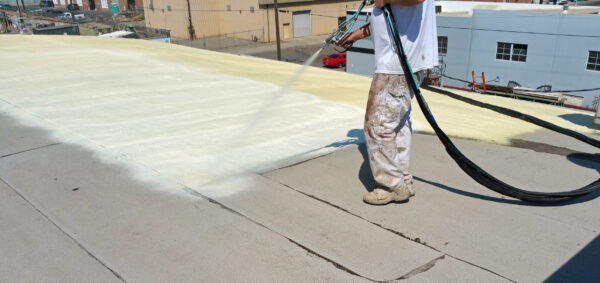
Logistics / Warehousing Operator · 4,200 m²
4,200m² Commercial Roof SPF System · Almaty
Logistics warehouse flat roof retrofit. Seamless spray foam roofing with reflective silicone topcoat. Single application replaced torch-on membrane + insulation, eliminated ponding water.
Textile Manufacturing · 2,500 m²
Metal Sandwich Panel Roofing · Tashkent
Textile factory expansion with 2,500m² insulated metal roofing. JYYJ-Q300 pneumatic delivered high-output application at entry-level cost structure.
Customer-specific details available under NDA · Full case studies on request
See Spray Foam Roofing in Practice
YouTube demonstration videos
@YongjiaPolyurethanemachinepuFrequently Asked Questions
What JYYJ machine is best for spray foam roofing?
Do you supply the raw materials too?
How long is shipping to Russia / LATAM / Middle East?
Do you provide technical training and installation support?
What certifications does the equipment have?
Planning a spray foam roofing project?
Share your output, voltage, and project scale. Pioneer recommends a matched JYYJ machine + material combination within 24 hours.