
Industrial Flooring & Floor Coating
Fast-set polyurea and high-build polyurethane floor coatings for warehouses, factories, parking decks, and food plants — seamless, chemical-resistant.
Industrial Flooring & Floor Coating: Equipment and Application Guide
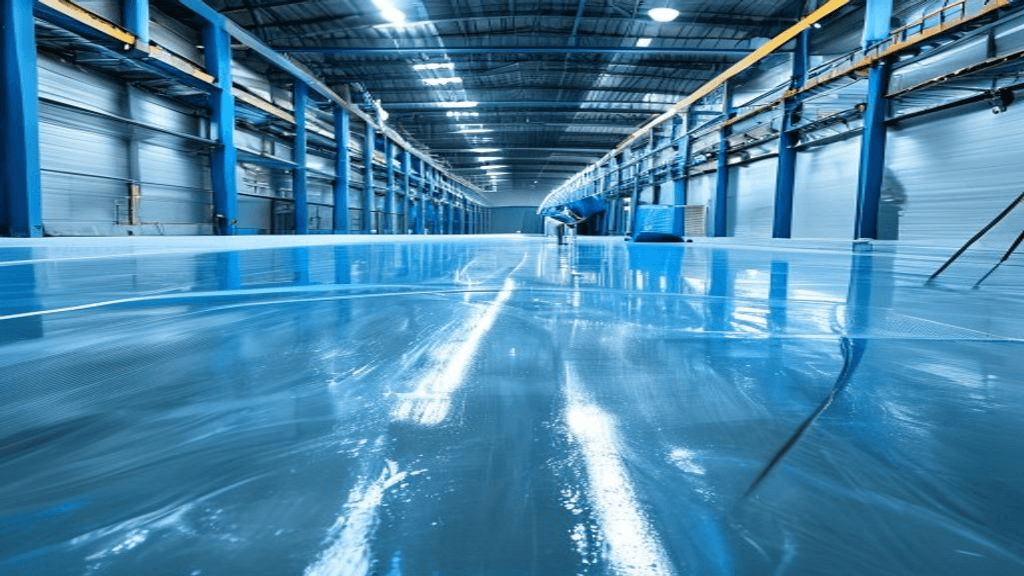
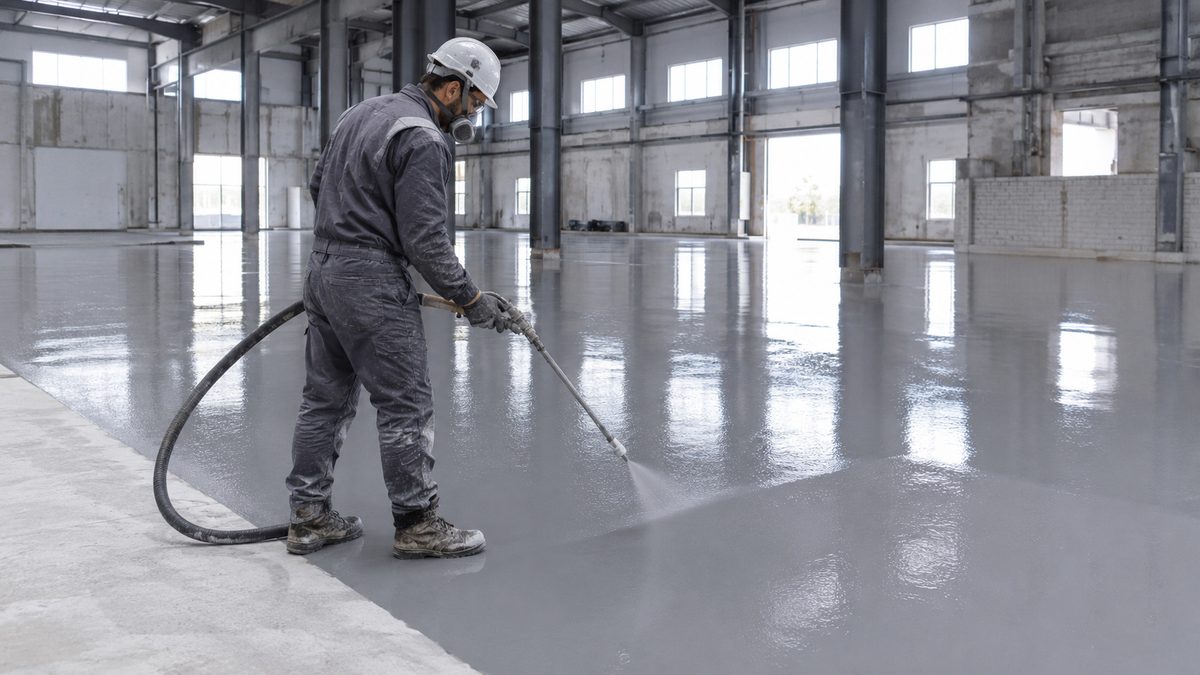
In a warehouse, manufacturing hall, or parking structure, the floor is one of the most punished surfaces in the building. Fork-lift tyres, chemical spills, dropped tooling, and constant foot and vehicle traffic grind away conventional paint and cementitious toppings within months. Sprayed polyurea and high-build polyurethane floor coatings answer that challenge with a seamless, monolithic membrane that bonds directly to prepared concrete, resists abrasion and chemical attack, and — critically for production environments — cures fast enough to return the floor to service the same shift it is applied.
This page explains why polyurea and polyurethane coatings are the preferred solution for demanding industrial floors, where they are used, and what spray equipment is required. Pioneer Spray manufactures the high-pressure, heated, plural-component machines that floor-coating contractors rely on, including the JYYJ-H-V8T and the compact JYYJ-H600PK.
Why polyurea and polyurethane coatings are the standard for industrial floors
Concrete alone is porous, dusty, and chemically vulnerable. A sprayed polyurea or polyurethane topcoat seals those weaknesses with a tough, continuous film that no tile grout line or paint brush can match.
- Seamless, monolithic surface. Unlike tile or block flooring, a sprayed coating has no grout lines, no joints, and no seams where bacteria, oil, or aggressive chemicals can accumulate. For food and pharmaceutical environments this hygienic continuity is mandatory, and the same quality is valued in any facility where contamination control matters. Abrasion performance is routinely validated against methods such as the ASTM D4060 Taber abrasion standard.
- Fast cure — back in service the same shift. Pure polyurea gels in seconds and is foot-traffic-ready within minutes; high-build polyurethane systems typically clear for light traffic in one to four hours. Both allow a contractor to coat a floor at night and hand it back to production the next morning, where conventional epoxy systems would demand 24 to 72 hours of downtime.
- Chemical and impact resistance. Industrial floor coatings are selected to resist the specific chemicals on each site — lubricants, hydraulic fluids, cleaning agents, acids, and food-grade sanitisers. A correctly specified polyurea or polyurethane membrane handles impact from dropped components and resists delamination under thermal cycling, outperforming thin-film epoxies in both dimensions. Quality management systems behind material production are benchmarked against frameworks such as ISO 9001 quality management.
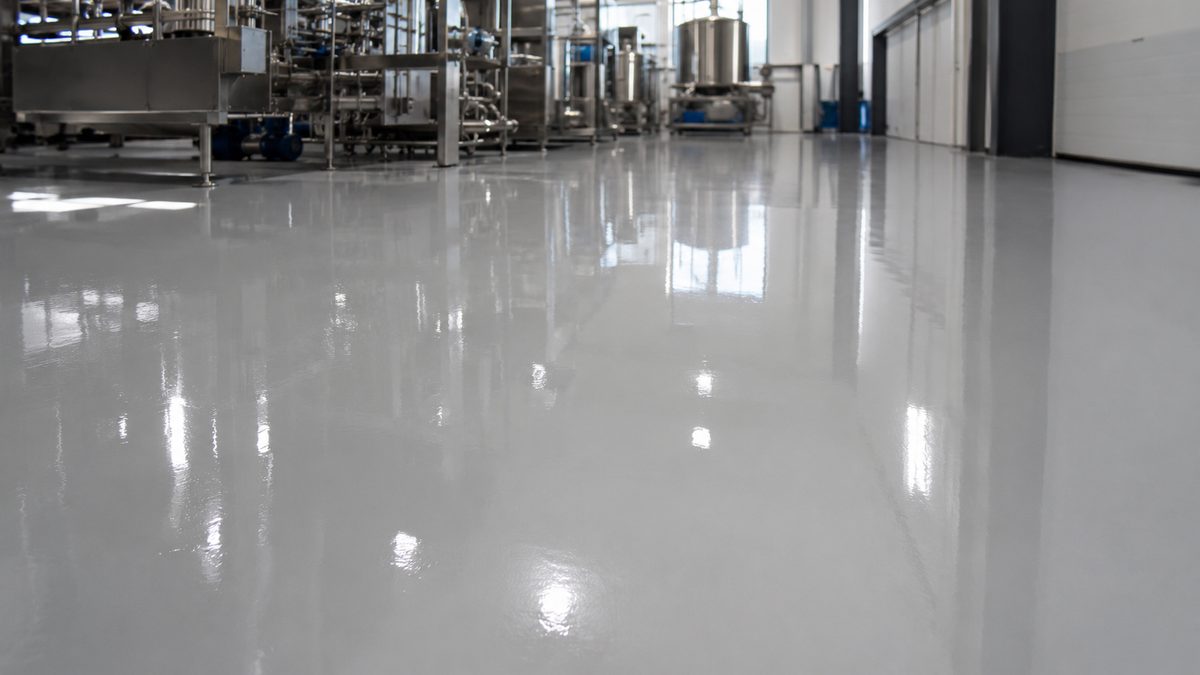
- Hygienic, non-porous, easy-to-clean surface. A dense, closed polyurea or polyurethane film does not absorb oils, fats, cleaning chemicals, or microbial contaminants the way bare concrete or aged epoxy does. The surface is easily swept, scrubbed, or pressure-washed to meet food safety and GMP requirements without degrading the coating.
- Conformable to drains, plinths, and coves. Because the coating is spray-applied as a liquid, it follows the floor-to-wall cove, wraps around drain collars and column bases, and transitions up kerbs without the joint gaps that tile or sheet flooring leaves at those transitions — points that are otherwise the first places where contamination and water ingress concentrate.
Where industrial floor coatings are used
Warehouses & Distribution Centres
High-traffic warehouses subject their floors to constant fork-lift and pallet-truck loads, abrasion from rubber tyres, and point loading from racking feet. A thick polyurea or polyurethane membrane protects the concrete slab, eliminates dust, and allows fast repair of isolated damaged zones without grinding the entire floor.
Manufacturing Floors & Assembly Halls
Production floors in automotive, aerospace, electronics, and general engineering facilities need a surface that tolerates dropped components, coolant spills, fork-lift impact, and delineation marking. A seamless coating system integrates colour zoning, anti-slip aggregate broadcast, and chemical resistance in one application.
Parking Decks & Car Park Ramps
Exposed parking structures face UV, freeze-thaw cycling, de-icing salt, tyre abrasion, and structural movement. An aromatic polyurea basecoat combined with an aliphatic UV-stable polyurethane or polyaspartic topcoat provides a tough, colour-stable, waterproof deck membrane that protects the reinforced concrete from chloride ingress and carbonation.
Food & Beverage Processing Plants
Food production floors must be seamless, non-slip, non-porous, chemically resistant to cleaning agents and organic acids, and capable of withstanding thermal shock from steam-cleaning. Polyurea and high-build PU systems certified to relevant food-contact standards meet all these requirements while cutting floor renewal downtime to a single overnight shift.
Chemical Plants & Secondary Bund Areas
Bund areas, containment floors, and chemical plant paving must hold aggressive solvents, acids, and alkalis without allowing penetration to the concrete or the ground. A chemical-resistant polyurea or polyurethane membrane lines the containment and provides the secondary spill barrier required under environmental regulations.
Cold-Store & Freezer Floors
Refrigerated and frozen-store floors operate under thermal cycling that cracks rigid tile adhesive and opens grout joints. A flexible, low-temperature-rated polyurea floor membrane bridges minor substrate cracks, remains impervious to moisture vapour transmission, and supports the fork-lift and pallet loads common in cold-chain logistics.
The floor coating application process
A durable industrial floor coating depends as much on substrate preparation as on material selection. The four-step process below applies to both fast-set polyurea and high-build polyurethane systems.
- 1. Concrete surface preparation. The concrete substrate is shot-blasted or diamond-ground to an ICRI CSP 3–5 surface profile, removing laitance, curing compounds, old coatings, and contamination. Moisture content is tested with a calcium chloride or relative humidity probe; readings above the material specification limit require a moisture-tolerant primer or a damp-concrete-compatible system. Cracks and joints are routed, filled, and cured before coating begins.
- 2. Priming. A penetrating epoxy or polyurethane primer is roller-applied to seal the concrete and maximise mechanical bond. On high-porosity or damp substrates a two-coat prime may be required. The primer must reach full cure tack-off before topcoat application or delamination will occur.
- 3. Spray coating to specified build thickness. The plural-component machine heats both the isocyanate and resin streams to the material specification temperature, pressurises them to 25–36 MPa, and delivers a precise 1:1 volumetric ratio to the impingement-mix spray gun. Fast-set polyurea is applied in single or multiple passes to build 60–120 mils (1.5–3 mm) for heavy-duty floors; for parking decks a 40–80 mil (1–2 mm) waterproofing membrane is typical. Where slip resistance is required, non-skid aggregate — typically aluminium oxide or broadcast sand — is seeded into the wet film before it sets.
- 4. Topcoat and inspection. On exposed parking decks and UV-lit food areas, an aliphatic polyurethane or polyaspartic topcoat is applied over the polyurea body coat to provide UV colour stability and a cleanable gloss or satin finish. Dry-film thickness is gauged at a grid of test points, adhesion pull-off tests are conducted at the specified frequency, and a holiday detector is run on containment-critical areas before the floor is handed back to operations. See also our work on tank lining for related containment coating applications, and read about our industrial flooring project in Riyadh for a real-world performance reference.
The equipment you need: high-pressure heated plural-component machines
Fast-set pure polyurea cannot be applied with low-pressure or unheated equipment. It is a 1:1 plural-component material that gels in seconds, so both streams must be heated to roughly 60 to 70 °C and delivered at high pressure to achieve proper impingement mixing and uniform atomisation at the spray gun. Pioneer Spray machines operate in the 25 to 36 MPa range that fast-set polyurea and reactive polyurethane floor systems require.
For heavy-duty warehouse and factory floors where large areas must be coated efficiently, the hydraulic JYYJ-H-V8T delivers the high output and stable operating pressure required to maintain consistent film build across thousands of square metres per shift. For contractors working on smaller floor areas, mezzanine levels, cold-stores, or phased production-bay shutdowns, the JYYJ-H600PK and the JYYJ-H-V6T provide the same heated, high-pressure plural-component capability in a more manoeuvrable package.
Not sure which Pioneer Spray machine suits your floor coating system, substrate condition, or production shutdown window? Contact our engineers and we will recommend the machine, hose length, gun, and tip configuration that fits your industrial flooring application.
Frequently Asked Questions
Which Pioneer Spray machine is best for industrial floor coating?
For large warehouse and factory floors requiring high daily output, the hydraulic JYYJ-H-V8T is the primary choice because of its sustained high pressure and volume. For smaller bays, parking deck waterproofing membranes, or food-plant work where mobility and a compact footprint matter, the JYYJ-H600PK and JYYJ-H-V6T handle fast-set polyurea and reactive polyurethane floor systems equally well.
Can the same machine spray both polyurea floor coatings and polyurethane topcoats?
Yes. Pioneer Spray machines are configurable for a range of plural-component floor coating systems including pure polyurea, polyurea-polyurethane hybrids, polyaspartic systems, and high-build polyurethane. The machine heat settings, pressure, and tip selection are adjusted to match the specific material supplier’s recommendations. We work with your material supplier to confirm the machine configuration before the job starts.
How long does a polyurea floor coating take to return to service?
Pure polyurea is tack-free in seconds and typically passes foot traffic within minutes of application. Light vehicle traffic is usually possible within one to two hours; full fork-lift and heavy vehicle loading is commonly approved at 24 hours. The exact return-to-service schedule depends on the material system, ambient temperature, and the substrate moisture condition, so always follow the material manufacturer’s published cure schedule.
What floor thickness is typical for industrial polyurea coatings?
Heavy-duty warehouse and factory floors are typically coated at 60 to 120 mils (1.5 to 3 mm) total dry-film thickness. Parking deck waterproofing membranes are commonly 40 to 80 mils (1 to 2 mm). Secondary containment bund floors and chemical plant areas may call for 80 to 200 mils (2 to 5 mm) depending on chemical exposure and regulatory requirements. Dry-film thickness is verified with a gauge at a specified grid density after each coat.
Recommended JYYJ Machines
JYYJ-H-V8T
Pioneer's top-tier flagship — the highest-output PLC-controlled spray machine in the JYYJ line. 2-15 kg/min at 36 MPa with 10-inch PLC touchscreen, one-click start/stop operation, and low-temperature protection that prevents incomplete mixing in cold conditions. Flat-mounted booster pump design reduces footprint while maintaining the highest output. Ideal for the most demanding industrial polyurea and polyurethane projects.
JYYJ-H600PK
Adjustable-ratio hydraulic spray machine with 7-inch PLC touchscreen and adjustable mixing ratio (1:1~1:2). 2-10 kg/min at 36 MPa for polyurea, high-density foam, and precision-critical applications. Recipe memory and data logging for project documentation. Adjustable ratio handles temperature-driven viscosity shifts and custom material formulations — unique in the JYYJ line.
JYYJ-H-V6T
Hydraulic workhorse with 7-inch PLC touchscreen control. 2-10 kg/min at 36 MPa, 105 m insulated pipe support, and intelligent automation. Ideal for contractors who need precision control without flagship pricing — the sweet spot between H600 entry and H600PK flagship.
Recommended Materials
Browse Polyurea Coating (A + B) →- ● Fast-set pure polyurea floor membrane (1:1, gels in seconds; ideal for heavy-duty warehouse, factory, and cold-store floors requiring same-shift return to service)
- ● Aromatic polyurea basecoat with aliphatic UV-stable polyurethane or polyaspartic topcoat (two-coat system for parking decks and exposed areas requiring colour stability, weathering resistance, and a cleanable gloss finish)
- ● High-build polyaspartic or polyurethane hybrid (slower gel time for self-levelling applications, food-plant floors, and chemical containment where extended open time aids coverage of complex geometry)
Why This Setup Works
Seamless monolithic floor membrane — no grout lines, joints, or seams for bacteria, oils, or chemicals to penetrate
Fast cure returns warehouse, factory, and food-plant floors to service the same shift
Chemical, abrasion, and impact resistance across lubricants, acids, and fork-lift traffic
Hygienic, non-porous, easy-clean surface meets food safety and GMP requirements
Technical Considerations
- Concrete must be shot-blasted or diamond-ground to ICRI CSP 3–5 profile and moisture-tested before coating
- Typical build 40–120 mils (1–3 mm) for industrial floors; parking deck membranes 40–80 mils; containment areas up to 200 mils
- Pure polyurea needs 1:1 ratio, 60–70 °C heat, and 25–36 MPa high-pressure plural-component machine
- Broadcast non-skid aggregate into wet film for slip resistance; apply aliphatic topcoat on UV-exposed or colour-critical surfaces
Real Projects in Industrial Flooring & Floor Coating
Projects for this application are being documented. Share your project requirement and we'll send relevant reference cases.
See Industrial Flooring & Floor Coating in Practice
YouTube demonstration videos
@YongjiaPolyurethanemachinepuFrequently Asked Questions
What JYYJ machine is best for industrial flooring & floor coating?
Do you supply the raw materials too?
How long is shipping to Russia / LATAM / Middle East?
Do you provide technical training and installation support?
What certifications does the equipment have?
Planning a industrial flooring & floor coating project?
Share your output, voltage, and project scale. Pioneer recommends a matched JYYJ machine + material combination within 24 hours.