
Pipe & Pipeline Coating & Lining
Sprayed pure polyurea for internal lining and external coating of oil and gas pipelines, water mains, mining slurry and tailings lines, and penstocks.
Pipe & Pipeline Coating & Lining with Polyurea: Equipment and Application Guide
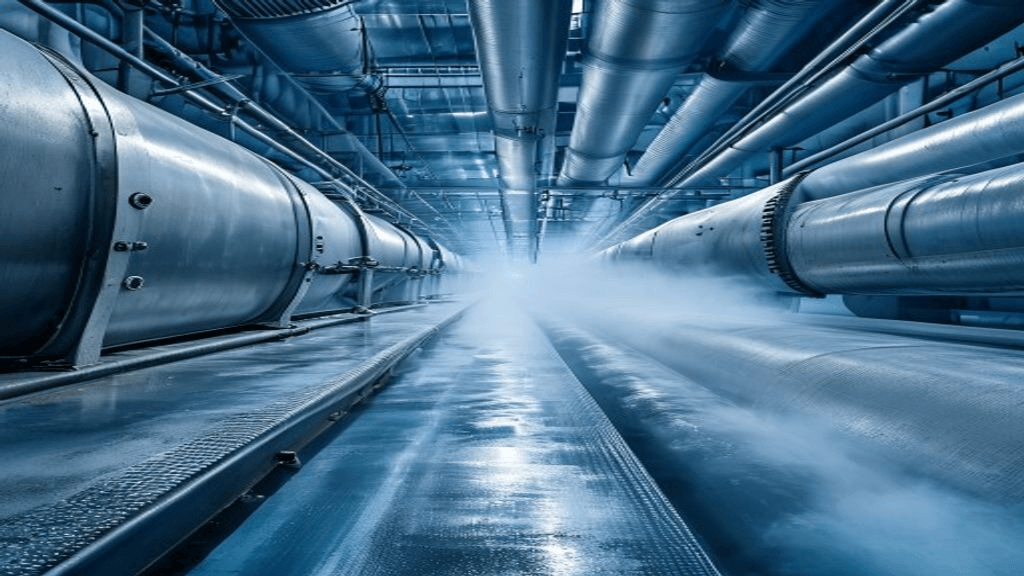
Pipelines operate under constant chemical and mechanical attack. Oil and gas lines corrode from the outside in buried soils; water mains pit from the inside as disinfection chemistry reacts with unprotected steel or cast iron; mining slurry and tailings pipes erode from the combined force of abrasive solids and corrosive process water. Sprayed pure polyurea has emerged as the lining and coating material of choice across all three industries because it gels in seconds, cures monolithically with no seams or weld laps, and delivers a corrosion- and abrasion-resistant film that conforms to bends, fittings, and large-diameter interiors that rigid liners cannot follow.
This page explains why polyurea is used for pipe and pipeline coating and lining, where it is applied, and what equipment you need. Pioneer Spray manufactures the high-pressure, heated, plural-component machines that lining contractors depend on to spray fast-set polyurea on schedule, including the heavy hydraulic JYYJ-H-V8T, the versatile JYYJ-H600PK, and the compact JYYJ-H-V6T.
Why polyurea for pipe coating and lining
Pipelines fail at the metal surface, where corrosion, chemical attack, and abrasive wear combine to perforate walls and contaminate product. Pure polyurea addresses all three mechanisms with a single, fast-applied film that out-performs conventional coatings across the typical range of pipeline service conditions.
- Seamless monolithic barrier, no weld laps or seams. Because polyurea is sprayed as a liquid that gels on contact, it forms one continuous membrane with no joints, overlap seams, or weld lines for corrosion to initiate. Tape-wrap and prefabricated liners have lap seams that allow moisture ingress; a sprayed coat has none. Adhesion is verified per ASTM D7234 coating adhesion protocols.
- Outstanding abrasion and corrosion resistance for slurry and buried pipe. Abrasion-grade polyurea formulations combine high tensile strength with high elongation, resisting both the gouging of abrasive solids in slurry pipe and the electrochemical attack of saline or acidic soils on buried external surfaces. A single polyurea system can serve both interior wear and exterior corrosion protection on the same pipe string.
- Fast cure — pipe back in service same shift. Pure polyurea gels in seconds and achieves handling strength within minutes. A rehabilitated pipe section can be relaid, pressure-tested, and returned to service the same shift, versus the multi-day cure windows of solvent-borne epoxies and coal-tar systems that extend outages and drive project costs.
- Conforms to bends, fittings, large-diameter interiors. Sprayed in place, polyurea coats complex internal geometry — elbows, tees, reducers, valve bodies, manhole junctions — that sleeve liners and cured-in-place methods cannot negotiate. On large-diameter mains and penstocks, a spray head or lance rig lays down a uniform build around the full 360° circumference without the dimensional fit issues of prefabricated inserts.
Where it is used
Oil & Gas Pipelines
Crude oil, natural gas, and refined product lines are externally coated with polyurea at joints, field welds, and repair sleeves where factory-applied coating is cut back, providing seamless corrosion protection in buried and submerged service where cathodic protection alone is insufficient.
Water & Wastewater Mains
Drinking water mains, force mains, and sewage pressure pipes are internally lined with polyurea to eliminate rust, stop pinhole leaks, and restore hydraulic capacity in aging cast-iron and steel infrastructure without the disruption and cost of full pipe replacement.
Mining Slurry & Tailings Lines
High-velocity abrasive slurry and tailings pipelines are among the most aggressive pipe services on earth. Internal polyurea lining resists the combined abrasion and corrosion that erodes unprotected steel pipe walls, and the fast cure allows spray-in-place rehabilitation of individual pipe sections during scheduled maintenance windows.
Penstocks & Large-Diameter Pipe
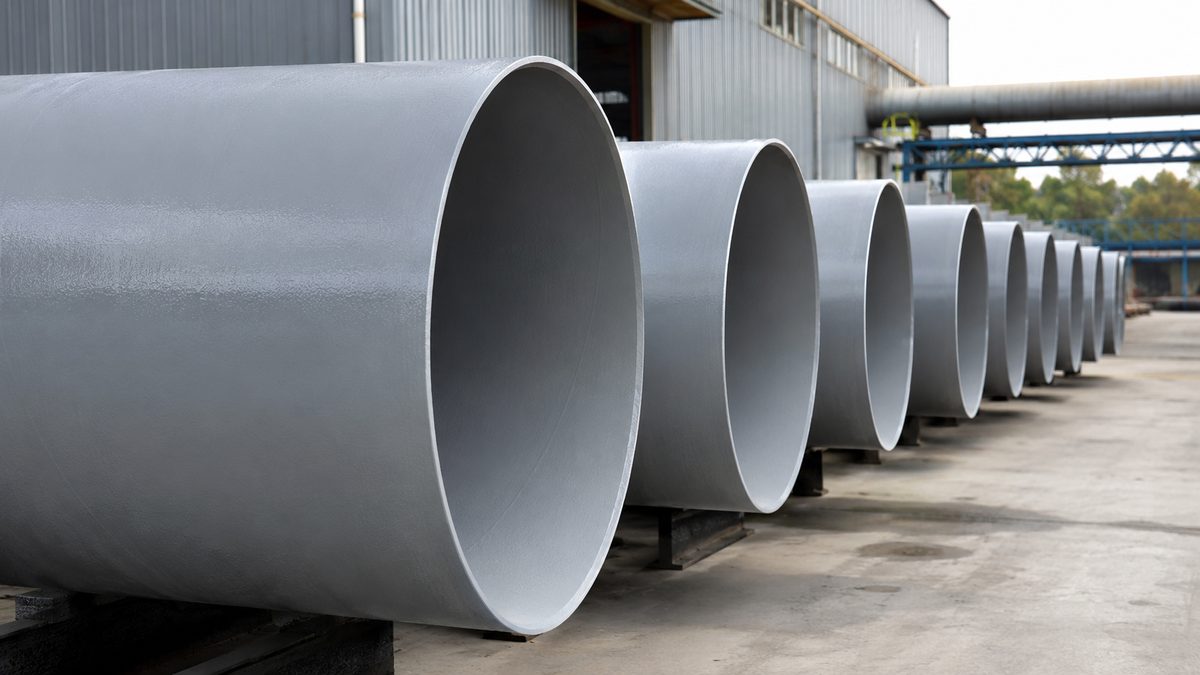
Hydroelectric penstocks and large-diameter industrial pipes are internally lined with polyurea to resist the high-velocity water erosion, cavitation damage, and corrosion that attack bare steel over long service cycles. A lance-mounted spray head delivers a uniform coat over the full pipe bore at production speed.
Buried Pipe External Corrosion Protection
External polyurea coating is applied at the pipe yard or on the lay barge to steel line pipe, protecting the external surface against soil-side corrosion in aggressive soils, stray-current environments, and marine splash zones where conventional coatings or tape-wrap are prone to disbondment.
Fittings, Valves, Bends & Spools
Pipe fittings, valve bodies, custom spools, and field bends are sprayed with polyurea as a conformable, monolithic coat that covers irregular geometry where prefabricated sleeves cannot seal. Lined fittings are critical nodes in any pipeline system because they are often the first points of failure when left unprotected.
The application process
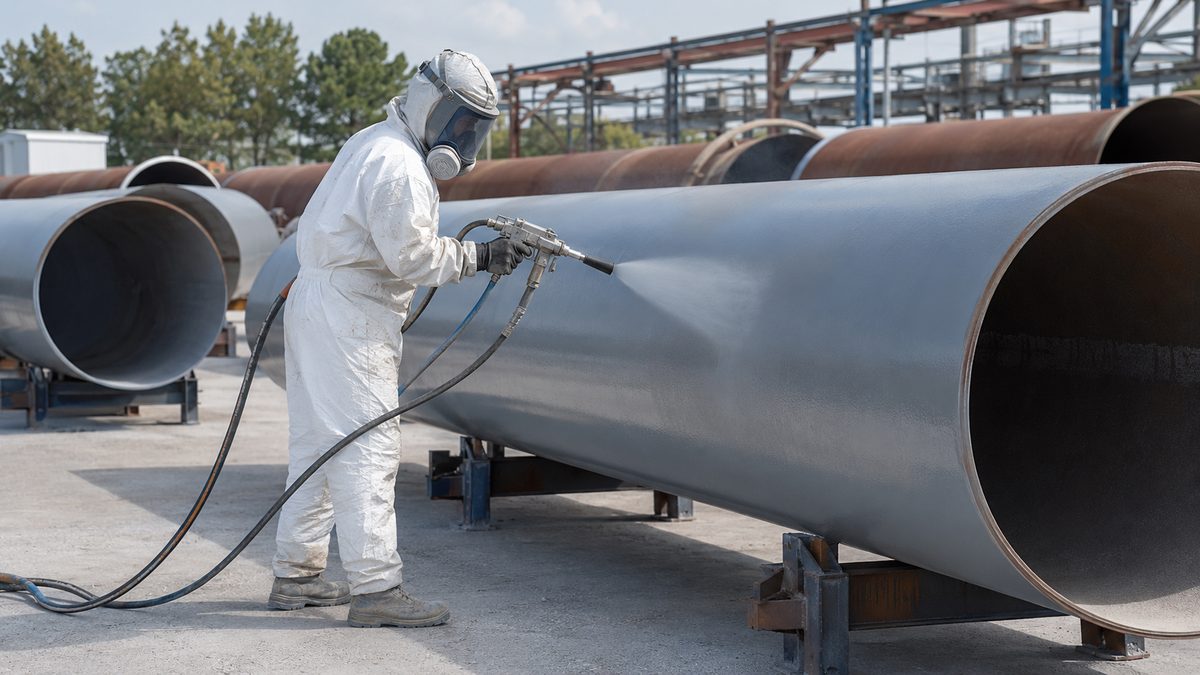
Spraying polyurea pipe lining and coating is a controlled, two-component process. Adhesion, film continuity, and service life depend on substrate preparation, accurate machine settings, and disciplined spray technique — whether applied externally on the pipe string or internally via a rotating spray head or lance rig.
- 1. Interior blast and prime. The pipe surface is abrasive-blasted to the profile specified by the polyurea supplier — typically near-white metal for internal lining of water and slurry pipe — then a compatible primer is applied and allowed to flash before spraying. On internal surfaces, a wheeled blast head or centrifugal blaster prepares the bore in a single pass; on externally coated field joints, hand or mechanical blasting restores the cutback zone to bare metal.
- 2. Machine setup and spinning- or lance-rig configuration. For small- to medium-diameter internal lining, a rotating spray head mounted on a pipe-liner carriage or lance rig traverses the bore while the plural-component machine — positioned outside the pipe — heats both streams to the 60 to 70°C required by the fast-set chemistry and pressurizes them to 25 – 36 MPa. For large-diameter pipe or external coating, a conventional spray gun is used. Ratio, temperature, and pressure are confirmed before the production run begins.
- 3. Spray to target build thickness. Polyurea is applied in controlled passes to reach the design dry-film thickness: typically 60 to 125 mils (about 1.5 to 3 mm) for corrosion-protection lining of water and gas pipe; 80 to 200 mils (2 to 5 mm) for abrasion-grade interior lining of slurry and tailings pipe; and 40 to 80 mils (1 to 2 mm) for external coating of field joints and spools. Wet-film thickness is monitored during application and dry-film thickness confirmed with a calibrated gauge.
- 4. Cure, holiday test, and return to service. The polyurea film is tack-free in seconds and passes a spark or wet-sponge holiday test within minutes. A 100% holiday test is standard on lined water and gas pipe; spot-testing is used on abrasion-grade slurry pipe. Once the coat passes inspection, the pipe section is ready for lowering-in, connection, and pressure testing, returning service the same shift rather than after multi-day epoxy cure cycles.
The equipment you need
Pure fast-set polyurea cannot be applied with unheated, low-pressure, or single-component equipment. It is a 1:1 plural-component material that gels on the substrate in seconds, requiring both streams to be heated to approximately 60 to 70°C and driven at 25 to 36 MPa so they atomize, mix, and react correctly at the gun or spray head. Pioneer Spray machines are designed specifically for this operating window and are proven in pipeline lining and coating service worldwide.
For large-diameter penstock and pipeline projects requiring high daily output, the hydraulic JYYJ-H-V8T delivers the pressure stability and volume needed to drive a spinning lance rig through long pipe strings without output drop. For smaller-diameter pipe rehabilitation and fitting lining, the JYYJ-H600PK provides the precise ratio control and heat management required for consistent internal lining quality. The JYYJ-H-V6T is a compact alternative for jobsite mobility where access to large-diameter equipment is limited.
This application shares chemistry with tank lining and secondary containment coating, so a single machine configured correctly can serve all three project types. Not sure which Pioneer Spray model matches your pipe diameter, output rate, or power supply? Contact our engineers and we will specify a machine, hose, gun, and lance-rig configuration for your pipeline project, verified against ISO 9001 quality management standards.
Frequently Asked Questions
What Pioneer Spray machine is best for internal pipe lining?
For large-diameter penstocks and high-volume slurry-pipe rehab projects, the hydraulic JYYJ-H-V8T is the standard choice because of its high output and sustained pressure at the lance head. For smaller-diameter water mains, fittings, and spools, the JYYJ-H600PK and JYYJ-H-V6T provide the ratio accuracy and heat stability needed for consistent internal lining quality without the footprint of a large hydraulic unit.
Can polyurea be used for both interior lining and exterior coating on the same pipe?
Yes. The same plural-component machine and a single polyurea formulation — or a two-coat aromatic body / aliphatic topcoat system — can serve both the interior abrasion- and corrosion-protection lining and the exterior field-joint coating on the same pipe string. This simplifies contractor logistics because one machine, one chemical supply, and one crew handle the full pipe scope.
What polyurea thickness is typical for pipeline lining?
Corrosion-protection lining of water and gas pipe is typically 60 to 125 mils (about 1.5 to 3 mm). Abrasion-grade internal lining for mining slurry and tailings pipe runs 80 to 200 mils (2 to 5 mm) depending on solids concentration and velocity. External field-joint coating is typically 40 to 80 mils (1 to 2 mm). Dry-film thickness is verified with a calibrated gauge and a 100% holiday (spark) test is standard on water and gas pipe.
How does pure polyurea compare with epoxy or cement-mortar lining for pipelines?
Pure polyurea cures in minutes rather than the hours-to-days required by solvent-borne epoxy and cement-mortar systems, dramatically reducing pipeline downtime per rehabilitated section. Its high elongation allows it to bridge minor substrate movement and cracks without the brittleness that causes cement-mortar lining to crack and disbond under surge pressure or soil settlement. Epoxy is still used where chemical resistance to specific solvents is required, but for abrasion, corrosion, and speed-of-return-to-service, pure polyurea is the superior choice in most pipeline rehabilitation applications.
New to the material? Read our guide to what polyurea lining is, where it is used and the equipment it needs.
Also lining municipal structures? See our page on polyurea manhole and sewer lining.
Recommended JYYJ Machines
JYYJ-H-V8T
Pioneer's top-tier flagship — the highest-output PLC-controlled spray machine in the JYYJ line. 2-15 kg/min at 36 MPa with 10-inch PLC touchscreen, one-click start/stop operation, and low-temperature protection that prevents incomplete mixing in cold conditions. Flat-mounted booster pump design reduces footprint while maintaining the highest output. Ideal for the most demanding industrial polyurea and polyurethane projects.
JYYJ-H600PK
Adjustable-ratio hydraulic spray machine with 7-inch PLC touchscreen and adjustable mixing ratio (1:1~1:2). 2-10 kg/min at 36 MPa for polyurea, high-density foam, and precision-critical applications. Recipe memory and data logging for project documentation. Adjustable ratio handles temperature-driven viscosity shifts and custom material formulations — unique in the JYYJ line.
JYYJ-H-V6T
Hydraulic workhorse with 7-inch PLC touchscreen control. 2-10 kg/min at 36 MPa, 105 m insulated pipe support, and intelligent automation. Ideal for contractors who need precision control without flagship pricing — the sweet spot between H600 entry and H600PK flagship.
Recommended Materials
Browse Polyurea Coating (A + B) →- ● Fast-set pure polyurea pipe lining (1:1, gels on contact, seamless internal barrier)
- ● Abrasion-grade polyurea for slurry and tailings pipe interiors (high tensile, high elongation)
- ● Aliphatic UV-stable polyurea topcoat for exposed external pipe and above-grade fittings
Why This Setup Works
Seamless monolithic lining — no welds, laps, or bolt holes for corrosion to initiate
Abrasion and corrosion resistance for slurry, buried pipe, and chemical environments
Fast cure returns pipe to service the same shift, not after multi-day epoxy cycles
Conforms to bends, fittings, and large-diameter interiors that sleeve liners cannot cover
Technical Considerations
- Interior blast to near-white metal and apply compatible primer before spraying
- Small-diameter internal lining requires a spinning or lance-rig spray head traversing the bore
- Typical build 60–125 mils (1.5–3 mm) for corrosion lining; 80–200 mils (2–5 mm) for abrasion-grade slurry pipe
- Pure polyurea needs 1:1 ratio, 60–70°C heat, and 25–36 MPa high-pressure plural-component machine
Real Projects in Pipe & Pipeline Coating & Lining
Projects for this application are being documented. Share your project requirement and we'll send relevant reference cases.
See Pipe & Pipeline Coating & Lining in Practice
YouTube demonstration videos
@YongjiaPolyurethanemachinepuFrequently Asked Questions
What JYYJ machine is best for pipe & pipeline coating & lining?
Do you supply the raw materials too?
How long is shipping to Russia / LATAM / Middle East?
Do you provide technical training and installation support?
What certifications does the equipment have?
Planning a pipe & pipeline coating & lining project?
Share your output, voltage, and project scale. Pioneer recommends a matched JYYJ machine + material combination within 24 hours.