
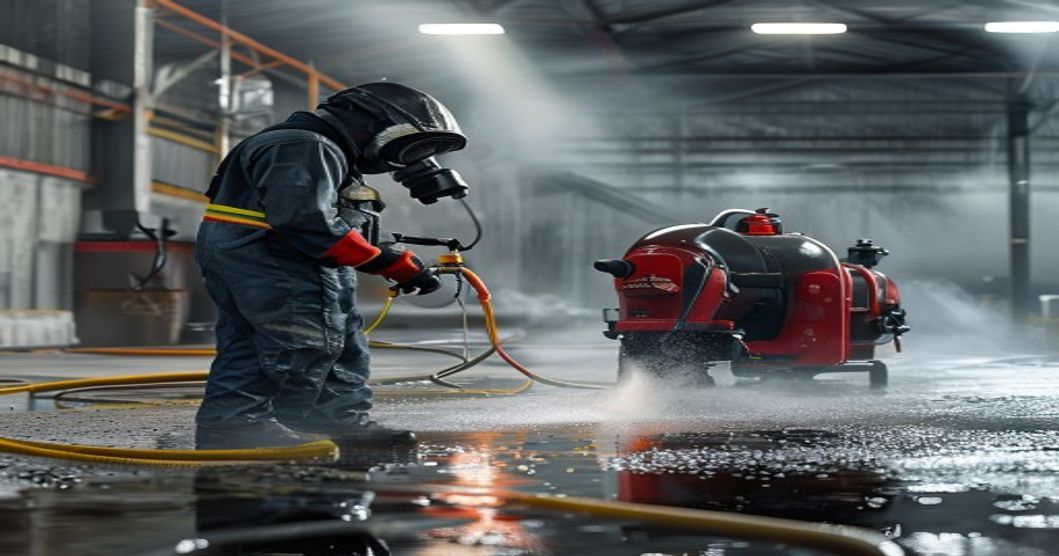
Quick answer. You do not need a $50,000 rig to start a polyurea coating business. A turnkey low-cost polyurea spray system — proportioner, heated hose, and spray gun bundled together — now starts around $3,250 and tops out near $11,200, compared with $40,000–$70,000 for a high-output Graco or PMC plural-component setup. For most startups taking on tanks, containment, truck beds, and small floors, an entry-level electric or hydraulic machine in the $5,000–$9,000 range delivers the pressure, heat, and ratio control you actually need to spray ASTM-compliant polyurea on day one.
Why the $50k entry barrier is mostly a myth
The conventional wisdom in the spray-coating trade is that you have to buy a top-tier reactor plus a trailer, a generator, an air compressor, and a transfer-pump package before you can quote your first job. Stacked together, that story ends at $50,000 or more — and it scares off the contractors, fabricators, and small applicators who would otherwise be the perfect entrants to this market.
The reality is that the high price of legacy rigs is driven by three things that a startup rarely needs in month one: extreme output (30+ lb/min for large commercial roofing crews), redundant brand markup on consumables, and the trailer/generator infrastructure for fully mobile work. Strip those away and the core machine — the part that actually proportions, heats, and atomizes the two components — is a much smaller cost than the industry's headline numbers suggest.
A modern turnkey polyurea machine consolidates the proportioner, heated hose, and gun into one package built around a single power source. That integration is the lever that breaks the $50k barrier: you are buying capability, not a fleet.
What a low-cost polyurea rig actually has to do
Polyurea is a 1:1 plural-component coating: an isocyanate (A-side) and a resin blend (B-side) that flash-cure within seconds of impingement mixing. Any machine — cheap or expensive — has to nail four non-negotiables:
- Pressure: 2,000–3,200 psi at the gun to atomize and impingement-mix the two streams properly. Our machines run 25–36 MPa (roughly 3,600–5,200 psi capable), which is comfortably above the floor for clean cure.
- Heat: Primary heaters on both A and B sides plus a heated hose to hold material at 60–70°C, because polyurea viscosity and ratio drift badly when cold.
- Ratio accuracy: A true 1:1 metering that holds under load — off-ratio polyurea stays tacky, blisters, or never reaches spec hardness.
- Reliability of the seals and check valves: the parts that the cheapest "too good to be true" machines skimp on.
If a machine hits all four, the coating it lays down can meet the same physical-property standards (tensile, elongation, tear) that buyers reference under ASTM International test methods — regardless of whether the rig cost $7,000 or $60,000. The substrate prep and applicator skill matter far more to the final film than the badge on the proportioner.
Turnkey machine tiers and startup budgets
Here is how a realistic startup ladder looks when you buy a turnkey package instead of assembling parts. These are full systems — machine, heated hose, and gun — not bare pumps.
| Tier | Turnkey price band | Output (lb/min) | Best first jobs | Power |
|---|---|---|---|---|
| Entry / pneumatic | $3,250 – $4,500 | ~2–6 | Small tanks, planters, samples, touch-up | Shop air |
| Electric (light pro) | $5,000 – $7,500 | ~8–15 | Containment, truck beds, small floors | 220V single/3-phase |
| Hydraulic (production) | $8,000 – $11,200 | ~18–30 | Roofing, large floors, daily commercial work | 3-phase + compressor |
| Legacy Graco / PMC | $40,000 – $70,000+ | ~20–40 | High-volume crews only | Trailer + generator |
The pattern is clear: the first three tiers cover the overwhelming majority of jobs a new applicator will quote in year one, and the most expensive of them is still roughly one-fifth the cost of a legacy rig. The JYYJ-A-V3 sits in the electric light-pro band and is the most common "first real machine" for new polyurea businesses, while a pneumatic JYYJ-Q300 lets you validate the business at the lowest possible buy-in before scaling.
Electric vs. hydraulic: which to buy first
For a startup, the real fork is electric versus hydraulic, not brand versus brand.
Electric machines
An electric spray machine is the sweet spot for most new entrants. It runs off 220V, needs no large hydraulic power unit, weighs less, is quieter, and is far simpler to maintain — you are not chasing hydraulic-fluid leaks or seal kits on a pump-within-a-pump. Output in the 8–15 lb/min range handles secondary containment, parking decks in sections, truck-bed liners, and small industrial floors without breaking a sweat. For a one-to-two person crew, this is usually the right call.
Hydraulic machines
A hydraulic spray machine earns its keep when you are spraying daily, doing roofing, or laying down large continuous areas where you need 18–30 lb/min to keep a wet edge on big membranes. It costs more, draws more power, and demands more maintenance discipline — but it is still less than a quarter of a comparable legacy production rig. Most operators buy electric first, prove the revenue, then add hydraulic capacity as a second machine rather than betting the whole startup budget on it.
The hidden startup costs nobody quotes you
The machine is the headline, but a credible polyurea startup budget includes a few items that have nothing to do with which proportioner you buy — and skipping them is what actually sinks new businesses:
- Respiratory protection and PPE: Polyurea A-side is isocyanate-based. A supplied-air respirator, suit, and gloves are mandatory, not optional. Review the controls and exposure guidance from OSHA's isocyanates standard and the health hazard summaries published by NIOSH (CDC) before your first spray day. Budget $1,500–$3,000 for proper air supply and PPE.
- Surface prep gear: grinder, shot blaster or rental, moisture meter. Adhesion failures are almost always prep failures.
- Power and air: a 220V supply (electric) or 3-phase plus compressor (hydraulic). Confirm your shop or generator can deliver it before the machine ships.
- Consumables and spares: mix chambers, tips, o-ring/seal kits, lubricant. Keep a spare gun rebuild kit on the shelf.
- Material: A and B drums or kits. This is your true recurring cost — the machine is a one-time capital line.
Add it up and a fully working, code-compliant electric polyurea startup lands around $9,000–$14,000 all-in — still a fraction of the $50k machine-only myth, and a genuinely accessible number for a contractor reinvesting one good season's profit.
Where turnkey beats buying a brand name
The case for a low-cost turnkey package over a legacy Graco or PMC reactor for a startup comes down to three things:
- Capital efficiency: You free up $30,000+ for material, marketing, and a second machine instead of locking it in one over-specified reactor.
- Right-sized output: A 40 lb/min reactor is wasted on a 200 sq ft containment job — and it still needs the same prep, the same PPE, and the same skill.
- One-vendor accountability: When the proportioner, heated hose, and gun ship as a matched set, ratio and pressure are pre-balanced and there is no finger-pointing between component suppliers.
The trade-off is honest: legacy rigs hold resale value, have a dense service network, and run all day in punishing duty cycles. If you are already a high-volume roofing crew, buy the reactor. If you are breaking into the market, a turnkey machine gets you spraying — and earning — at a fifth of the cost, then you scale on revenue, not on debt.
FAQ
Q: What is the cheapest way to start spraying polyurea?
The lowest entry point is a turnkey pneumatic machine running on shop air, starting around $3,250 for the full machine-hose-gun package. It is limited to small jobs (tanks, samples, touch-ups), but it lets you validate the business and learn the process before committing to an electric or hydraulic unit.
Q: Can a low-cost machine spray coating that meets spec?
Yes. Final film properties depend on correct pressure (2,000+ psi), proper heat (60–70°C), accurate 1:1 ratio, and substrate prep — not on the machine's price tag. Any rig that holds those parameters can apply polyurea that meets the tensile, elongation, and tear values referenced under ASTM test methods. Skill and prep matter more than badge.
Q: Electric or hydraulic for my first machine?
Electric for almost every startup. It runs on 220V, is lighter and quieter, needs less maintenance, and handles containment, truck beds, and small floors at 8–15 lb/min. Move to hydraulic only when you are doing daily roofing or large continuous areas that demand 18–30 lb/min.
Q: What safety equipment do I legally need?
Because polyurea uses isocyanates, you need a supplied-air respirator, chemical suit, and gloves, plus engineering controls and exposure monitoring per OSHA's isocyanates requirements and NIOSH guidance. This is mandatory before your first job — budget $1,500–$3,000 for air supply and PPE.
Q: How long until a startup rig pays for itself?
With material at typical kit pricing and a turnkey electric machine around $6,000–$7,500, many applicators recover the machine cost within the first 8–15 jobs, depending on local labor rates and the size of work they win. Because the buy-in is so much lower than a legacy reactor, the payback window is measured in weeks of work, not seasons.
Breaking into polyurea coating no longer requires a $50,000 leap of faith. Pick the turnkey tier that matches your real first-year jobs, budget honestly for PPE and prep, and let the revenue — not a brand-name price tag — fund your next machine.