
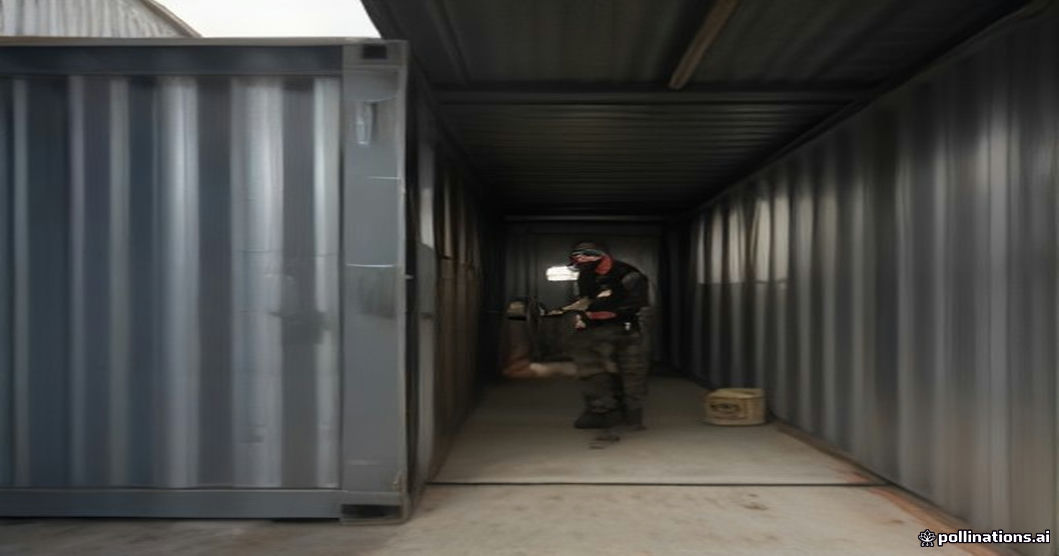
Quick answer. A thin steel container needs continuous closed-cell insulation plus control of indoor humidity because the shell conducts heat rapidly and can fall below the dew point within minutes. For most occupied mobile units, 40-75 mm of closed-cell spray foam limits heat flow, seals irregular corrugations, and reduces concealed condensation. Thickness alone will not solve exposed steel ribs, wet substrates, air leakage, or unvented cooking and shower moisture.
Successful shipping container spray foam insulation starts with the assembly, then works backward to surface preparation, spray-machine settings, ventilation, fire protection, and inspection. A crew must coordinate those items before wiring, wall lining, cabinets, or plumbing conceal the steel.
The figures below are planning ranges rather than substitutes for the foam supplier’s technical data sheet, local building code, or a project-specific condensation analysis. Record the approved material, substrate temperature, proportioner settings, test patches, and installed thickness for every unit.
Why a Thin Steel Shell Needs Two Forms of Control
Container steel is commonly only about 1.6-2.0 mm thick and has thermal conductivity near 45-60 W/m·K. It offers almost no useful thermal resistance, while each corrugation, rail, corner post, weld, and fastener can conduct exterior temperature toward the occupied side.
Consider indoor air at 24°C and 60% relative humidity. Its dew point is approximately 16°C, so any uninsulated steel surface below 16°C can collect water even if the completed room feels warm.
The correct design therefore has two linked targets: keep the interior-facing surface above the design dew point and prevent humid room air from reaching cold steel. Closed-cell foam can contribute insulation, air control, and low vapor permeance, but only where it is bonded continuously.
A nominal 50 mm layer with an aged thermal resistance around RSI 2.1-2.5 m²·K/W, roughly R-12 to R-14, may suit a temperate mobile office. Cold-storage conversions, hot roofs, coastal humidity, or winter conditions below -10°C require project calculations and may move the target toward 75-100 mm.
Interior volume is valuable. Applying 50 mm rather than constructing a 100-150 mm framed cavity can preserve roughly 0.5-0.8 m of usable width across a heavily framed container, depending on the lining system, service cavity, and treatment of corrugated walls.
That space saving disappears if exposed rails bypass the foam. Steel has hundreds of times the conductivity of the insulation, so a narrow untreated member can create a cold stripe, surface staining, or repeated condensation behind the finish.
Interior or Exterior Foam, Thickness, and Thermal Bridges
Interior application is common for workshop-built container homes because the shell remains the weather surface and the crew can spray under controlled conditions. It also makes adhesion, thickness, and penetrations visible before the lining is installed.
Its main limitation is geometric. Foam must follow every valley and crown without leaving shadowed steel, while interior partitions and service channels must not reconnect the cold shell to the warm finish with uninsulated metal.
Exterior application can wrap rails and corrugations more continuously, preserving interior dimensions. It requires a complete weatherproof cladding system because spray foam should not remain exposed to sunlight, standing water, impact, or transport abrasion.
A hybrid assembly may place 25-50 mm of closed-cell foam against the steel and add fibrous or board insulation inside a service frame. The first layer must remain continuous; placing absorbent insulation directly against cold steel without an air-control layer creates a concealed moisture reservoir.
| Design condition | Planning thickness | Machine and application target | Detail requiring inspection |
|---|---|---|---|
| Temperate mobile office or workshop | 40-50 mm closed-cell foam | Two or three lifts; 1:1 volumetric ratio; material temperature typically 45-65°C as approved by the supplier | Continuous cover over corrugation valleys, welds, rails, and door frame |
| Four-season container home | 50-75 mm after hygrothermal review | Plural-component pressure commonly set within a 1,500-2,500 psi process window, subject to the foam data sheet | Roof-to-wall junction, floor perimeter, window bucks, and metal studs |
| Hot-humid mobile washroom | 50-75 mm plus mechanical dehumidification | Stable A/B pressure, heated hose, and short pauses to avoid overheated material | Plumbing penetrations, shower exhaust, floor drains, and wet-side lining |
| Exterior continuous wrap | 50-100 mm under protective cladding | Lift thickness limited to the manufacturer’s maximum, often 25-50 mm per pass | UV protection, drainage plane, transport damage, and cladding attachments |
Closed-cell foam used for this work commonly delivers about R-6 to R-7 per inch, or RSI 1.05-1.23 per 25 mm. Use the declared aged value for the selected product rather than a generic initial value when calculating code compliance.
Do not bury structural corrosion or treat foam as a repair for weakened steel. A corner post, roof rail, or floor member with section loss needs assessment and repair before insulation covers it.
Surface Preparation Around Coatings, Welds, and Services
Start by identifying the existing coating. New containers may carry factory primers and topcoats, while used units can have marine coatings, oil, salt, soot, silicone sealant, or unknown repair paint that prevents adhesion.
Request coating records where available and test the surface rather than assuming every factory finish accepts polyurethane foam. A practical adhesion program uses cleaned test areas, records the preparation method, and performs pull or peel checks after the foam has cured.
Remove active rust, loose scale, flaking paint, grease, dust, and water. ISO 8501-1 visual grades can guide steel-cleaning discussions, while a project specification should define the required method, compatible primer, maximum time before spraying, and acceptable flash rust.
Grinding welds completely flat is unnecessary and may damage the structure. Remove sharp spatter, slag, loose oxide, and cutting debris; then coat bare steel with a primer confirmed compatible with both the substrate and foam.
Corrugations create gun-angle problems. Hold the spray gun close enough to maintain the approved pattern, commonly 450-600 mm from the surface, and make an angle pass into each valley before building the field thickness.
Mask electrical boxes, cable ends, threaded inserts, pipe unions, door hardware, data connectors, and identification plates. Foam expansion can fill a box through a 3-5 mm gap and can make future replacement impossible.
Keep wiring accessible in a separate service cavity where possible. If cable touches foam, verify its temperature rating and compatibility; some power cables require ampacity adjustment when surrounded by thermal insulation.
Install sleeves or bucks before spraying through-wall penetrations. A 25 mm pipe passing through a 35 mm irregular hole leaves an air path unless the annulus is sealed and protected from movement.
Measure steel temperature with a contact probe or calibrated infrared instrument adjusted for emissivity. The substrate must be dry and usually at least 3°C above the calculated dew point throughout spraying and early cure, not merely at the start of the shift.
Ventilation, Fire Protection, and Occupant Safety
Spraying is an industrial operation, even inside a small container. The restricted volume concentrates aerosol and vapor, while a single open door does not demonstrate controlled airflow through roof corners, corrugations, or a connected cab.
A 40 ft high-cube container has an interior volume of roughly 67 m³, or 2,370 ft³. A provisional rate of 10 air changes per hour requires about 395 cfm, but an industrial hygienist and the material safety documentation must establish the actual exhaust rate, capture arrangement, filter, discharge location, and re-entry period.
Create directional airflow from clean entry to contaminated exhaust and confirm it with smoke before spraying. A pressure difference near 5 Pa can help limit migration, provided the fan, duct, filters, and makeup-air openings maintain flow as filters load.
Follow the OSHA guidance on isocyanate exposure and the written respiratory-protection program required by OSHA 29 CFR 1910.134. Fit testing, medical evaluation, cartridge limitations, supplied-air selection, gloves, eye protection, and protective clothing must be decided before the gun is triggered.
The EPA spray polyurethane foam health guidance also emphasizes controlling exposure during installation and observing the manufacturer’s re-entry instructions. Do not replace the published re-entry period with a generic 24-hour rule.
Foam used in an occupied unit normally requires an approved thermal or ignition barrier. ASTM E84 results describe surface-burning behavior under a specific test; they do not prove that bare foam may remain exposed in every wall, ceiling, utility chase, or mobile occupancy.
Specify the lining or tested coating by product, dry-film thickness, substrate, fastening pattern, and approved assembly. A nominal 12.7 mm gypsum board may serve in some assemblies, but local rules and the intended occupancy determine acceptance.
Permanent moisture management remains necessary after installation. Size exhaust for showers and cooking, route condensate outdoors, and maintain indoor relative humidity near 30-60%; a sealed container with two occupants can accumulate several liters of moisture per day from breathing, cooking, and washing.
Compact Spray Equipment, Hose Layout, and Inspection
Container work rewards a compact proportioner with stable 1:1 metering, independently controlled heaters, a heated hose, pressure monitoring, and a gun that can reach narrow corrugations. The machine must fit the electrical supply and production pace rather than being selected only by maximum output.
The electric JYYJ-A-V3 spray machine suits workshop cells where a repeatable power supply and a compact footprint matter. Configure the quote around the required voltage, 10-30 m hose plan, foam supplier’s temperature window, spray gun, transfer system, spare seals, and commissioning support.
For sustained multi-container production, the hydraulic JYYJ-H600 provides the platform for longer spray cycles and higher daily output. Record the quoted maximum output, heater capacity, connected load, maximum hose length, and generator requirement on the purchase order; model names alone do not define a working system.
A yard without sufficient electrical service may favor the pneumatic JYYJ-Q300. Its compressor must maintain the specified pressure and airflow at full demand; a planning range of 0.7-0.8 MPa and 0.6-1.0 m³/min must be confirmed against the ordered configuration.
Pioneerspray turnkey packages span approximately $3,250-$11,200, covering compact entry systems through higher-output heated configurations. That creates a defined four- to five-figure capital range for fabricators comparing new Graco or PMC equipment, but every comparison should include the proportioner, primary heaters, heated hose length, gun, transfer pumps, compressor or generator, freight, commissioning, and spare parts.
Buying a proportioner without the required auxiliaries gives a false price comparison. A low package price has operational value only if the specified system can hold the material supplier’s 1:1 ratio, temperature window, and spray pressure at the planned hose length.
Place the machine outside the spray enclosure in a clean, dry zone. Keep drums shaded and within their specified storage temperature, route hoses without tight bends, protect them at the steel threshold, and leave enough slack for the operator to reach the ceiling without pulling the gun sideways.
For a 12 m container, a 15 m hose may work when the machine sits near the door. A 30 m hose offers more yard flexibility but increases electrical load, heat loss, pressure drop, material residence time, and the volume that must be managed during shutdown.
Size a generator from measured simultaneous load, then add at least 25% reserve for starting, voltage drop, and cold-weather heater demand. A system drawing 20 kW continuously should normally be paired with at least 25 kW usable output, subject to power factor and manufacturer requirements.
Pre-lining inspection checklist
- Log ambient temperature, steel temperature, relative humidity, calculated dew point, material lot numbers, drum temperatures, A/B pressures, heater settings, and hose temperature.
- Probe every wall and roof bay on a marked grid; record minimum thickness in millimeters rather than reporting only an average.
- Inspect rails, welded seams, corners, corrugation valleys, window bucks, sleeves, wiring routes, and the door frame with a mirror and strong side lighting.
- Look for dark substrate, pinholes, cracks, friable foam, scorching, fish-mouth separation, soft material, unusual odor, and off-ratio color or texture.
- Photograph each bay before lining, including a ruler or depth probe, machine display, container number, date, and repair locations.
- Verify that exhaust, fire-protection details, access panels, drains, and penetrations match the approved drawings before concealment.
Repair details and common failures
For a small void, cut back to sound, well-bonded foam and expose enough clean substrate to confirm the defect boundary. Reprepare the steel, condition it above dew point, and respray within the material supplier’s allowable recoat procedure.
Do not patch a wet or off-ratio area by covering it with another 25 mm lift. Remove affected material completely, investigate pressure imbalance, blocked filters, depleted drums, heater deviation, or transfer-pump cavitation, and document the corrected settings.
Foam pulling away from the steel often points to contamination, condensation, excessive lift temperature, or an incompatible coating. Repeated dark lines over ribs indicate thermal bridging or thin coverage rather than a general shortage of wall thickness.
Large cavities behind a visually smooth face can result from spraying across corrugation crowns too quickly. Angle passes, controlled lift thickness, and depth checks in valleys prevent a cosmetic skin from hiding untreated steel.
FAQ
Q: How thick should shipping container spray foam insulation be?
Use 40-50 mm as an early planning range for mild climates and 50-75 mm for many four-season units, then verify the result with local design temperatures, indoor humidity, the selected foam’s aged R-value, and thermal-bridge calculations. Cold climates, roofs exposed above 50°C, or refrigeration may require 75-100 mm or a different assembly.
Q: Does closed-cell foam stop container-home condensation?
It can control condensation where it forms a bonded, continuous air and thermal layer and where indoor humidity is managed. A 50 mm field thickness will not protect an exposed rail, leaking penetration, wet steel surface, or unvented shower producing moisture inside the unit.
Q: Should foam be sprayed inside or outside a shipping container?
Interior foam is easier to protect and inspect in a workshop, while exterior foam can cover more thermal bridges and preserve floor area. Exterior installations need cladding, drainage, UV protection, and transport-damage planning; interior work needs careful treatment of rails, corrugations, services, and lining attachments.
Q: What spray-machine settings should a contractor use?
Start only from the foam manufacturer’s data sheet. Closed-cell plural-component materials commonly require a fixed 1:1 volumetric ratio, component temperatures around 45-65°C, and spray pressures within roughly 1,500-2,500 psi, but the approved ranges for the purchased material and machine configuration control.
Q: Can occupants stay in the container while it is sprayed?
No occupants or unprotected workers should remain in or near the controlled spray zone. Establish containment, mechanical exhaust, respiratory protection, exclusion boundaries, and the material manufacturer’s ventilation and re-entry period before work begins.
Q: Which compact machine fits mobile-unit production?
An electric JYYJ-A-V3 configuration suits a powered workshop, a hydraulic JYYJ-H600 platform suits repeated higher-output production, and a pneumatic JYYJ-Q300 can fit sites built around compressed air. Select from measured output, power, compressor capacity, heater load, hose length, service access, and a complete $3,250-$11,200 turnkey scope rather than choosing by pump type alone.