
Livestock & Barn Spray Foam Insulation
Closed-cell PU spray foam for dairy, beef, swine, and equine barns — cuts heating and cooling fuel, stops condensation and sweating, and seals the envelope for animal health.
Livestock and Barn Insulation with Spray Foam: Equipment and Application Guide
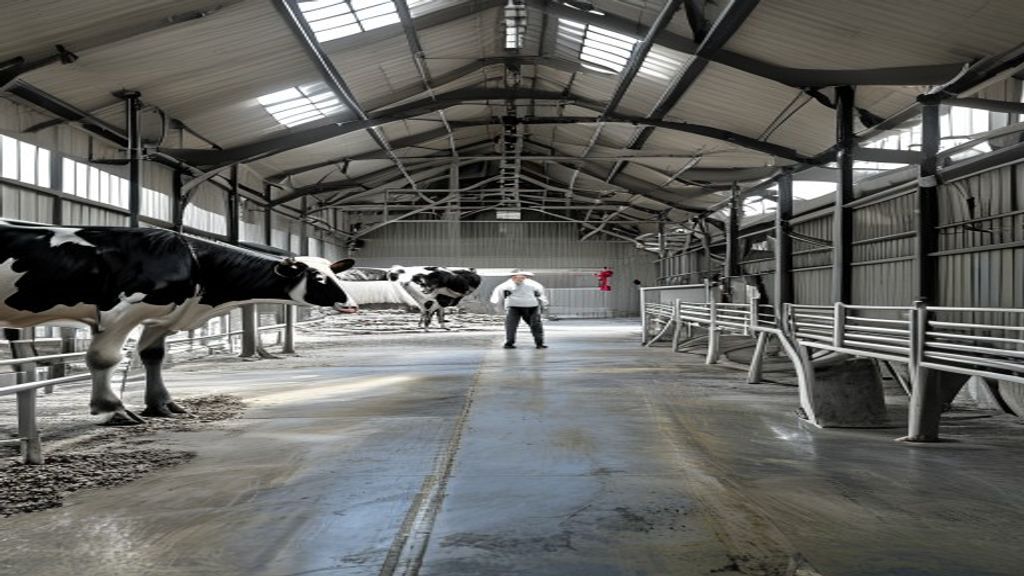
For dairy, beef, swine, and equine producers, the barn envelope is what stands between a stable interior climate and the weather outside. Animals add a constant load of heat, moisture, and respired gases to the air, and every uninsulated panel, joint, or end wall lets that conditioned air escape while cold surfaces start to sweat. The result is wasted fuel, dripping ceilings, damp bedding, and the respiratory and hoof problems that follow. This is why closed-cell spray polyurethane foam (SPF) has become the agricultural insulation of choice for modern livestock buildings, and why the spray foam machine on the job decides whether the foam lands at the right density and thickness.
This page explains where livestock spray foam insulation is used, how it is applied, and what equipment you need. Pioneer Spray builds the high-pressure, heated plural-component machines that agricultural applicators rely on for barn insulation, including the hydraulic JYYJ-H600PK.
Why closed-cell spray foam is the standard for livestock barns
Barn envelopes face demands that batt, board, and sheet systems struggle to meet. Spray polyurethane foam is applied as a liquid that expands and cures in seconds, forming a continuous insulating layer bonded directly to steel, wood, or concrete. For agricultural service the closed-cell variant is preferred because its sealed cells resist moisture, washdown, and vapor drive.
- Cuts heating and cooling fuel. A continuous, air-sealed foam envelope sharply reduces a barn's heating and cooling load, holding warmth in winter housing and slowing summer heat gain in dairy and swine buildings, as discussed in University of Minnesota Extension guidance on dairy housing.
- Stops condensation and sweating. By keeping interior surface temperatures above the dew point, closed-cell foam stops the dripping ceilings and wet bedding that drive pneumonia, mastitis, foot rot, and chilled young stock in cattle and swine barns.
- High R-value per inch. Closed-cell polyurethane foam delivers among the highest thermal resistance of any sprayable material, roughly R-6 to R-7 per inch, so producers hit target performance with a thin, space-saving layer that does not steal headroom or stall width.
- Seamless air barrier. Sprayed in place, the foam seals every seam, fastener, and penetration, eliminating the air leakage and thermal bridging that plague batt and board insulation in agricultural buildings and that wind drives hard in open farmland.
- Pest, rodent, and washdown resistance. A monolithic closed-cell layer denies rodents and birds the cavities and nesting gaps that fibrous insulation invites, and it stands up to the pressure-washing and manure-handling routine of a working livestock operation, as noted in Dairy Global coverage of barn construction and housing.
Closed-Cell vs Open-Cell for Livestock Barns
Open-cell foam is lighter and cheaper, but it is vapor-permeable and absorbs water, which is a real liability in a barn that gets pressure-washed and is full of animal moisture. Closed-cell spray polyurethane foam, typically applied around 32 kilograms per cubic meter (about 2.0 pounds per cubic foot) for agricultural work, gives the moisture resistance, air sealing, and rigidity a livestock building needs. It is the correct choice for sidewalls, ceilings, and end walls in dairy, beef, swine, and equine barns.
Where livestock spray foam is used
Dairy Barns & Free-Stall
Free-stall barns and tie-stall housing use seamless closed-cell foam on roofs and sidewalls to hold a stable temperature, stop ceiling condensation onto cows and stalls, and protect milk production through summer and winter.
Beef / Cattle Barns
Mono-slope and enclosed cattle barns get a continuous insulated shell that cuts winter heat loss, blocks summer radiant gain off the roof, and keeps young stock out of the cold, damp conditions that trigger respiratory disease.
Swine / Hog Barns
Farrowing, nursery, and finishing barns demand tight temperature and ventilation control. Closed-cell foam seals the envelope, holds piglet warmth, and resists the constant moisture and washdown of a hog facility. The same insulation logic carries over to poultry house insulation.
Horse / Equine Stables
Stables and indoor arenas use spray foam on roof decks and walls to steady temperature, kill condensation that drips on horses and tack, and deaden noise, while resisting the rodents that plague loose-fill insulation in barns.
Calf Hutches & Nurseries
Calf barns and group nurseries rely on a tight, insulated envelope to hold warmth around vulnerable young animals, keep bedding dry, and cut the chilling and humidity that drive scours and pneumonia.
Grain Silos & Feed Storage
Steel grain bins, silos, and feed sheds receive a sprayed, monolithic layer that controls condensation inside the shell, protects stored feed from spoilage and crusting, and seals the structure against pests.
The barn spray foam application process
Spraying closed-cell foam for a livestock barn is a controlled, two-component chemical process. Results depend on substrate preparation, accurate machine settings, and disciplined technique.
- 1. Substrate preparation. Sidewalls, ceilings, roof decks, and end walls are cleaned of dust, manure residue, and loose material. Steel, wood, and concrete are checked for moisture, and ambient and substrate temperatures are confirmed against the foam manufacturer specification.
- 2. Machine setup. The plural-component machine heats the A-side (isocyanate) and B-side (polyol resin) to the recommended temperature and pressurizes both to spec. Proportioning must stay on ratio, and hose heat must hold the chemicals at the right viscosity all the way to the gun.
- 3. Spray to target thickness and density. Foam is applied in controlled lifts, allowing each pass to rise and cure. Barn work commonly targets a closed-cell density around 32 kilograms per cubic meter, built up to the sidewall, roof, and ceiling thickness the thermal design requires.
- 4. Cure and inspection. The foam cures within minutes to a hard, closed surface. Crews verify thickness, check for voids or pinholes, and confirm a continuous monolithic layer with no exposed substrate before any thermal-barrier or finish coat is applied.
The equipment you need: high-pressure plural-component machines
Agricultural closed-cell foam cannot be applied with low-pressure or unheated equipment. It requires a high-pressure, heated, plural-component spray foam machine that holds precise temperature, pressure, and a consistent A-to-B ratio. If the ratio drifts or the chemical is sprayed cold, the foam comes out off-spec, with poor density and weak adhesion, exactly what fails an inspection and wastes material across a large barn roof and walls.
Pioneer Spray builds JYYJ-series machines for this work, operating in the 25 to 36 MPa range needed to atomize and mix high-viscosity polyurethane reliably. For the broad roof decks and sidewalls of dairy, cattle, swine, and equine barns, the hydraulic JYYJ-H600PK delivers the stable pressure, integrated heating, and high daily output that make barn insulation fast and uniform. Matching the machine, hose, and gun to your building size and chemical system is the difference between a one-day job and constant rework.
Not sure which JYYJ model fits your livestock operation, chemical supplier, or jobsite power supply? Contact our engineers and we will recommend a configuration based on your barn dimensions and target foam density.
Frequently Asked Questions
What is the best spray foam machine for insulating barns?
Agricultural closed-cell foam needs a high-pressure, heated, plural-component machine that holds precise temperature, pressure, and mixing ratio across large barn surfaces. Pioneer Spray's hydraulic JYYJ-H600PK is built for this scale, delivering the stable 25 to 36 MPa pressure and high daily output that dairy, cattle, swine, and equine buildings require.
Do you supply the spray foam chemicals as well as the machine?
Pioneer Spray manufactures the high-pressure plural-component machines, hoses, and guns. We do not sell the polyurethane chemical system itself, but our engineers will help you match the JYYJ machine settings, heat, and pressure to the agricultural closed-cell system your chemical supplier provides.
What foam thickness and density are typical for a livestock barn?
Agricultural closed-cell spray foam is commonly applied around 32 kilograms per cubic meter (about 2.0 pounds per cubic foot). Thickness is set by climate and target R-value, with roofs, sidewalls, and ceilings built up in controlled lifts to the level the thermal design requires.
Can a low-pressure kit insulate a barn?
No. Closed-cell agricultural foam needs a high-pressure, heated, plural-component machine to maintain correct temperature, pressure, and mixing ratio across the large area of a barn. Low-pressure kits cannot deliver consistent density or adhesion at that scale, which is why a machine such as the JYYJ-H600PK is used.
Recommended JYYJ Machines
JYYJ-H600PK
Flagship hydraulic spray machine with 10-inch PLC touchscreen and adjustable mixing ratio (1:1~1:2). 2-10 kg/min at 36 MPa for polyurea, high-density foam, and precision-critical applications. Recipe memory and data logging for project documentation. Adjustable ratio handles temperature-driven viscosity shifts and custom material formulations — unique in the JYYJ line.
JYYJ-H600
Entry-level hydraulic spray machine — the gateway to professional-grade pressure. 2-12 kg/min at 36 MPa with 6-18 MPa hydraulic system pressure. Compatible with both polyurethane foam and polyurea coatings. Air-cooling system protects motor and pump for sustained heavy-duty operation.
JYYJ-H800
Maximum-throughput hydraulic spray machine with simple button controls. 2-14 kg/min at 36 MPa with 38 kW heating — the highest heating power in the JYYJ line for sub-zero environments. Built for large industrial projects where output volume matters more than touchscreen sophistication.
Recommended Materials
Browse Polyurethane Foam (A + B) →- ● Closed-cell rigid PU foam (~32 kg/m3 / 2.0 lb/ft3)
- ● Agricultural-grade closed-cell SPF system
- ● Optional thermal-barrier / ignition-barrier topcoat
Why This Setup Works
Closed-cell SPF (~R-6 to R-7 per inch) cuts dairy, cattle, swine, and equine barn heating and cooling load
Air-sealed monolithic envelope holds stable temperature for animal health and production
Stops condensation and sweating — drier bedding, lower pneumonia, mastitis, and foot-rot pressure
Seamless layer resists rodents, birds, and the washdown moisture of a working barn
Technical Considerations
- Target density: ~32 kg/m3 (2.0 lb/ft3) closed-cell for agricultural service
- Thickness set by climate and target R-value; built up in controlled lifts
- Substrate must be clean of dust and manure residue, dry, and within spec temperature
- Check local code for thermal-barrier / ignition-barrier topcoat over exposed foam
Real Projects in Livestock & Barn Spray Foam Insulation
Projects for this application are being documented. Share your project requirement and we'll send relevant reference cases.
See Livestock & Barn Spray Foam Insulation in Practice
YouTube demonstration videos
@YongjiaPolyurethanemachinepuFrequently Asked Questions
What JYYJ machine is best for livestock & barn spray foam insulation?
Do you supply the raw materials too?
How long is shipping to Russia / LATAM / Middle East?
Do you provide technical training and installation support?
What certifications does the equipment have?
Planning a livestock & barn spray foam insulation project?
Share your output, voltage, and project scale. Pioneer recommends a matched JYYJ machine + material combination within 24 hours.